
Scholarships
Swiss Scholarships for Indian Students 2027: Fully Funded Options, Eligibility, Deadlines & How to Apply

Published
1 week agoon
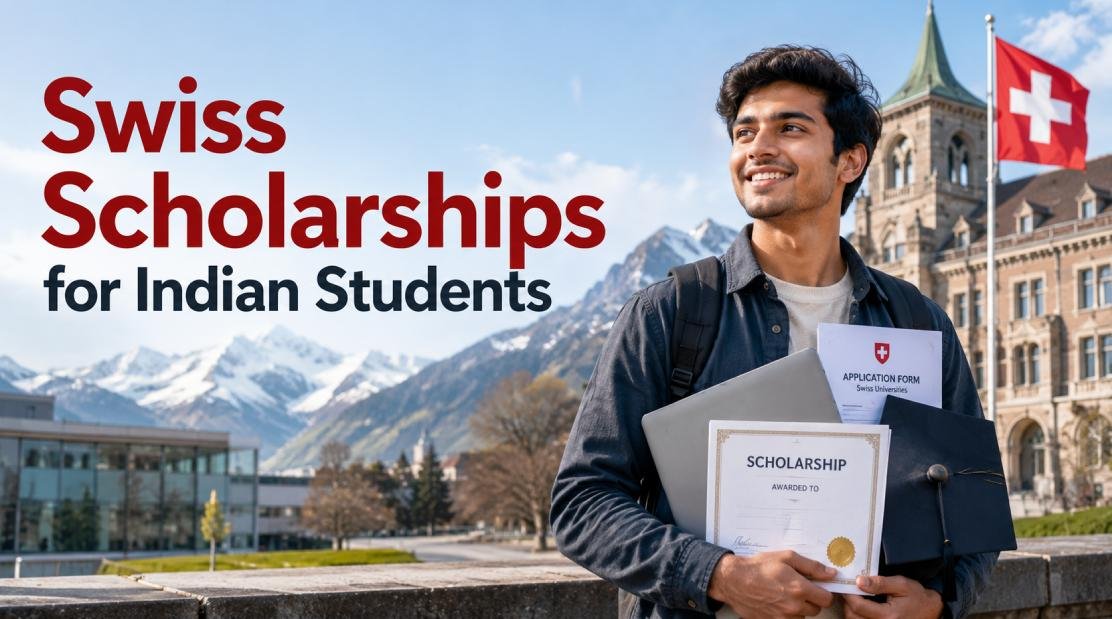
Indian students can apply for several scholarships to study or conduct research in Switzerland in 2027. The main opportunities include the Swiss Government Excellence Scholarships, ETH Zurich Excellence Scholarship & Opportunity Programme, EPFL Master Excellence Fellowships, University of Geneva Excellence Master Fellowships, and ThinkSwiss Research Scholarships.
The right scholarship depends on your academic level. A Bachelor’s or taught Master’s applicant should not automatically target the Swiss Government Excellence Scholarship because the 2027–2028 Indian call covers research fellowships and PhD scholarships, not regular Bachelor’s or taught Master’s degrees. Master’s applicants should instead look closely at university-funded awards such as ETH Zurich ESOP, EPFL Excellence Fellowships, and the University of Geneva Excellence Fellowship.
Key fact: The Swiss Government Excellence Scholarship application window for Indian applicants opened on 20 August 2026. The India-specific deadline for the 2027–2028 academic year is 10 November 2026 at 11:59 PM Swiss local time.
Best Swiss Scholarships for Indian Students at a Glance
| Scholarship | Best For | Funding | Duration | Current Deadline/Status | Full Funding? |
|---|---|---|---|---|---|
| Swiss Government Excellence Research Fellowship | Indian PhD students seeking research in Switzerland | CHF 2,450/month, approx. USD 3,027/month | 6–12 months | 10 Nov 2026 for India | Substantial funding, but some costs remain |
| Swiss Government Excellence PhD Scholarship | Master’s graduates pursuing a Swiss PhD | CHF 2,450/month, approx. USD 3,027/month | 12 months, renewable up to 36 months under current rules | 10 Nov 2026 for India | Substantial funding, but some costs remain |
| ETH Zurich ESOP | Exceptional Master’s applicants | CHF 13,500/semester, approx. USD 16,677, plus tuition waiver | 3–4 semesters | 1–30 Nov 2026 | Yes, designed to cover study and living costs |
| EPFL Master Excellence Fellowship | Outstanding Master’s applicants | CHF 10,000/semester, approx. USD 12,353 | Up to 4 semesters | Dec 15 / Mar 31 rounds | Major funding, but student pays tuition and living costs from award |
| University of Geneva Excellence Master Fellowship | High-achieving science Master’s applicants | CHF 10,000–15,000/year, approx. USD 12,353–18,530 | Regular Master’s duration subject to performance | Next cycle not yet published; 2026 deadline was Feb 28 | Partial/substantial |
| ThinkSwiss Research Scholarship | Bachelor’s students after year 2 and Master’s students | CHF 60/day, approx. USD 74/day | 2–3 months | 2026 cycle closed; next call should be checked officially | Research-stay funding |
Funding amounts and eligibility come from the respective official scholarship providers. USD equivalents are approximate because foreign-exchange rates change.
Can Indian Students Get Scholarships in Switzerland?
Yes. Indian students are eligible for government-funded, university-funded, and research-mobility scholarships in Switzerland.
The Swiss Government Excellence Scholarship programme explicitly includes India. ETH Zurich, EPFL, and the University of Geneva also accept international applicants for their respective excellence scholarships when applicants meet university admission and scholarship requirements. ThinkSwiss has a dedicated Asia-Pacific programme that includes students enrolled at eligible Indian institutions.
Eligibility is not the same across programmes. Some scholarships require only a Bachelor’s degree and excellent academic performance. Others require a completed Master’s degree, a research proposal, and written support from a professor in Switzerland.
Are There Fully Funded Scholarships in Switzerland for Indian Students?
Yes, but students should use the term “fully funded” carefully.
The strongest full-cost Master’s option in this list is the ETH Zurich Excellence Scholarship & Opportunity Programme, or ESOP. ETH Zurich states that ESOP covers full study and living costs during the Master’s programme through a scholarship plus a tuition-fee waiver. From autumn 2027, the scholarship amount is CHF 13,500 per semester.
The Swiss Government Excellence Scholarship provides substantial funding but should not automatically be described as covering every possible expense. It pays CHF 2,450 per month and provides additional benefits, but the Swiss government states that tuition or semester fees may remain payable. Conference and field-research expenses are also generally excluded.
EPFL provides CHF 10,000 per semester, but EPFL explicitly states that fellowship holders remain responsible for expenses such as tuition fees and rent.
Swiss Scholarships for Indian Students by Study Level
Scholarships for Bachelor’s Students
Bachelor’s students have fewer major full-degree scholarship options than Master’s or doctoral applicants.
The most relevant programme in this list is ThinkSwiss. Indian undergraduate students can qualify after completing their second year by the time their Swiss research stay begins. ThinkSwiss is designed for short research stays rather than complete Bachelor’s degrees.
Indian Bachelor’s students should therefore distinguish between:
- scholarships funding an entire Bachelor’s degree;
- university financial aid;
- research internships;
- mobility grants;
- scholarships available only after progressing to a Master’s programme.
The Swiss Government Excellence Scholarship should not be treated as a normal Bachelor’s scholarship for Indian students.
Scholarships for Master’s Students
Master’s applicants have several strong university-funded options.
The most important include:
- ETH Zurich Excellence Scholarship & Opportunity Programme
- EPFL Master Excellence Fellowship
- University of Geneva Excellence Master Fellowship
These scholarships usually connect directly to admission to the relevant university. Applicants must therefore satisfy both programme admission requirements and scholarship selection criteria.
Scholarships for PhD Students
Indian students seeking doctoral research should prioritize the Swiss Government Excellence PhD Scholarship.
Applicants need a relevant Master’s degree, a viable research project, and support from an eligible academic supervisor in Switzerland. The scholarship is intended for full-time doctoral research in Switzerland.
Students should also search individual Swiss university departments for funded doctoral positions. A salaried PhD vacancy and a scholarship are different funding models.
Research Scholarships for Indian Students
Two especially relevant programmes are:
- Swiss Government Excellence Research Fellowship
- ThinkSwiss Research Scholarship
The Swiss Government Research Fellowship is aimed at qualified early-career researchers pursuing doctoral work in their home country. ThinkSwiss instead targets eligible Bachelor’s and Master’s students undertaking short research stays.
1. Swiss Government Excellence Scholarships for Indian Students
The Swiss Government Excellence Scholarships are awarded by the Swiss Confederation to support international academic exchange and research cooperation. Recipients are selected by the Federal Commission for Scholarships for Foreign Students, also known as FCS or ESKAS.
Indian students can verify the programme through the official Swiss Government Excellence Scholarships page and Switzerland’s official scholarship information for India.
Which Swiss Government Scholarships Are Available to Indian Students in 2027?
For the 2027–2028 cycle, the official country list shows two scholarship types for India:
- Research Fellowship
- PhD Scholarship
The call opened on August 20, 2026. The India deadline is November 10, 2026. The official country table does not list the Art Scholarship for India in this cycle.
Swiss Government Research Fellowship
The research fellowship allows selected researchers to conduct a research project at an eligible Swiss higher education institution or research institute.
The applicant must already be pursuing doctoral-level research in the home country. The research stay lasts at least six months and no more than twelve months. Extensions are not available for this fellowship.
Swiss Government PhD Scholarship
The PhD scholarship supports selected applicants undertaking doctoral research at a Swiss institution.
The initial funding period is 12 months. Under the current 2027–2028 rules, the scholarship can be renewed twice for a maximum of 36 months, subject to academic progress. The Swiss government has also announced policy changes that will allow longer doctoral support under rules taking effect from 2028.
Swiss Government Scholarship Amount and Benefits
Research fellowship and PhD scholarship recipients receive:
- CHF 2,450 per month, approximately USD 3,027 per month;
- compulsory health-insurance premiums covered for non-EU/EFTA recipients;
- a one-time CHF 600 rental-deposit grant, approximately USD 741;
- a Half-Fare Travelcard for Swiss public transportation;
- a return-flight allowance for eligible non-EU/EFTA scholarship holders.
The scholarship is intended to cover the basic living costs of one person. It is not treated as a salary.
What Does the Swiss Government Scholarship Not Cover?
Applicants should budget for possible additional expenses.
The scholarship does not automatically cover tuition or semester fees. The Swiss government notes that some institutions may charge scholarship holders approximately CHF 600–2,000 per semester or reduced tuition fees.
The programme also does not provide dedicated funding for:
- international conferences;
- fieldwork expenses;
- family members;
- all possible personal expenses.
This distinction is important when comparing the scholarship with a full-cost award such as ETH ESOP.
Swiss Government Scholarship Eligibility for Indian Students
For both research and PhD scholarships in the 2027–2028 cycle, applicants generally need:
- a Master’s degree or equivalent completed by 31 July 2027;
- completion by 30 June 2027 if the host institution is ETH Zurich;
- a date of birth after 31 December 1991;
- a detailed research project;
- a project timeline;
- support from an eligible academic supervisor in Switzerland;
- a supervisor support letter and short CV;
- compliance with the programme’s Switzerland-residence restrictions.
PhD applicants need a supervisor who is authorized to supervise doctoral theses.
Who Should Apply for the Swiss Government Excellence Scholarship?
You should consider applying if you:
- have completed or will complete the required Master’s qualification;
- have a focused research question;
- can demonstrate research competence;
- have identified a Swiss professor working in the same field;
- can explain why the project should be conducted in Switzerland;
- can demonstrate future academic or research cooperation potential;
- satisfy the age and residence conditions;
- can prepare a rigorous research proposal.
A strong academic record helps, but grades alone do not determine selection.
Who Should Not Apply?
The Swiss Government Excellence Scholarship is usually a poor fit if you:
- want funding for a normal Bachelor’s degree;
- want funding for a regular taught Master’s programme;
- have no research project;
- have not identified a Swiss academic supervisor;
- plan to submit the same generic proposal to several universities;
- cannot satisfy the age or residence rules;
- have already received a Swiss Government Excellence Scholarship;
- are looking for a postdoctoral scholarship for 2027–2028.
Postdoctoral scholarships have been discontinued from the 2027–2028 academic year.
Required Documents for the Swiss Government Scholarship
The scholarship committee evaluates more than whether a document exists. Each document serves a specific purpose.
| Document | Why It Is Required | What a Strong Version Demonstrates |
|---|---|---|
| Academic CV | Shows academic development | Research experience, publications, awards and relevant skills |
| Motivation letter | Explains purpose | Clear Switzerland fit and long-term academic direction |
| Research proposal | Tests project quality | Originality, methods, feasibility and clear milestones |
| Swiss supervisor support letter | Confirms host support | Genuine research alignment and supervision capacity |
| Swiss supervisor CV | Confirms supervisor profile | Academic relevance to the project |
| Recommendation letters | Provides independent assessment | Research ability and academic maturity |
| Degree certificates | Confirms qualification | Required academic background |
| Transcripts | Shows academic performance | Strong results in relevant subjects |
| Passport | Confirms identity/nationality | Valid identification |
| Residence documents | Required if already in Switzerland | Compliance with residence eligibility |
The research proposal must use the official FCS/ESKAS format and may be up to five pages including a non-specialist summary. Two professors in the relevant academic field must also be provided as referees through the application system. For Indian applicants, the official guidance states that self-certification of relevant academic copies is accepted.
Step-by-Step Swiss Government Scholarship Application Guide
Step 1: Confirm That You Are Applying for the Correct Scholarship
Determine whether you need a research fellowship or a PhD scholarship.
Do not start by preparing documents for a scholarship that does not match your academic level.
Step 2: Confirm the India-Specific Deadline
For the 2027–2028 academic year, Indian applicants must submit by 10 November 2026 at 11:59 PM Swiss local time.
Step 3: Identify an Appropriate Swiss Institution
Search universities and recognized research institutes based on your research field.
Potential hosts include ETH Zurich, EPFL, universities such as Zurich, Basel, Bern, Geneva and Lausanne, and recognized research institutions within the ETH Domain.
Step 4: Find a Swiss Academic Supervisor
A supervisor is mandatory.
Your supervisor should conduct research that directly overlaps with your proposed project. For a PhD scholarship, the professor must have the authority to supervise a doctoral thesis.
Step 5: Contact the Supervisor Professionally
Your initial email should explain:
- who you are;
- your current academic status;
- the research problem you want to investigate;
- why the professor’s work is relevant;
- the skills you bring;
- why Switzerland and that laboratory are appropriate;
- what you are asking the professor to supervise.
Attach a concise academic CV and a focused project summary.
Step 6: Develop the Research Proposal
Define:
- research question;
- existing knowledge gap;
- research objectives;
- methods;
- data or experimental approach;
- expected output;
- research timeline;
- relevance to the host group;
- potential future collaboration.
The proposal should read as a feasible research plan, not as a broad personal statement.
Step 7: Prepare Your Supporting Documents
Collect transcripts, degree certificates, passport copies, CV, motivation letter, supervisor support and referee details.
Do not wait until the final week to request academic recommendations.
Step 8: Register on GO ESKAS
The Swiss Government uses Grants Online, or GO ESKAS, for scholarship applications.
Applicants must register, sign in, complete the application and upload the required information electronically. The authorities specifically state that applications should not be sent by email or paper.
Step 9: Check the Application for Formal Errors
Verify:
- dates;
- document formats;
- scholarship category;
- professor information;
- translations;
- research-project consistency;
- referee details;
- passport information.
Formal errors can result in exclusion.
Step 10: Submit Before the Deadline
Do not aim for the final few minutes.
Technical problems, missing referee actions, or incorrect uploads can become difficult to fix near the deadline.
How Does the Swiss Government Scholarship Selection Process Work?
The application passes through a competitive assessment process managed by the Swiss authorities.
The Federal Commission for Scholarships for Foreign Students evaluates applications using three major dimensions:
- Candidate profile
- Quality of the research project
- Synergies and potential for future research cooperation
The detailed 2027 guidance further emphasizes academic profile, research competence, motivation, methodological quality, quality of supervision, and future collaboration potential.
This means a strong application must establish a logical relationship:
Applicant expertise → research problem → Swiss supervisor → Swiss host institution → feasible project → future academic value
For the 2027–2028 cycle, final scholarship decisions are expected by the end of May at the latest.
Common Swiss Government Scholarship Mistakes
The most damaging mistakes include:
- Applying without a Swiss supervisor.
The application will not be considered. - Submitting an incomplete application.
Formal deficiencies can trigger exclusion. - Submitting multiple applications for different host universities or scholarship types.
Current rules prohibit simultaneous multiple applications by the same applicant. - Sending more than one research proposal.
Applicants should present one coherent project. - Using a generic research proposal.
A proposal should fit the specific supervisor and host research environment. - Ignoring residence restrictions.
Applicants already in Switzerland must satisfy the programme’s permitted entry-date requirements. - Applying after already receiving the scholarship.
Previous Swiss Government Excellence Scholarship recipients are excluded. - Treating PhD admission and the scholarship as the same process.
They are separate procedures. - Relying only on grades.
Research quality and supervision fit matter significantly. - Paying someone who promises guaranteed selection.
The Swiss Government Excellence Scholarship application itself is free.
2. ETH Zurich Excellence Scholarship & Opportunity Programme
The ETH Zurich Excellence Scholarship & Opportunity Programme, commonly called ESOP, is one of the strongest scholarships for Indian students pursuing a Master’s degree in Switzerland.
Students can review the official ETH Zurich ESOP scholarship page.
ETH ESOP Funding for 2027
From the autumn semester of 2027, ESOP provides:
- CHF 13,500 per semester;
- approximately USD 16,677 per semester;
- a tuition-fee waiver;
- mentorship;
- access to the ETH Foundation network.
ETH Zurich states that the award covers full study and living costs during the regular Master’s programme. The scholarship normally lasts three or four semesters depending on the degree.
ETH ESOP Eligibility
Applicants should have an exceptionally strong Bachelor’s record.
ETH describes the target level as approximately the top 10% of the Bachelor’s programme, equivalent to grade A based on the applicant’s self-assessment.
Applicants are not eligible if they:
- already hold a Master’s degree; or
- are already enrolled in an ETH Zurich Master’s programme.
ETH ESOP Required Documents
Applicants submit the normal ETH Master’s admission documents plus a Master’s thesis pre-proposal.
If the chosen Master’s programme does not already require references, ESOP applicants must provide two professors as referees.
ETH warns that plagiarism or intentional or negligent misinformation in the thesis pre-proposal can result in exclusion or later revocation.
ETH ESOP Deadline for 2027
The application window for a Master’s programme beginning in autumn 2027 is:
November 1–30, 2026.
Applicants must apply during ETH Zurich’s first Master’s application window.
How Competitive Is ETH ESOP?
ETH Zurich expects approximately 60 ESOP scholarships for the 2027–2028 academic year.
Admissions committees evaluate applications. The Rector of ETH Zurich makes the final scholarship decision. Applicants may also be invited to a telephone or video interview in February, with final results communicated around the end of March.
3. EPFL Master Excellence Fellowships
The EPFL Master Excellence Fellowship targets outstanding students admitted to a Master’s programme at the École Polytechnique Fédérale de Lausanne.
See the official EPFL Master Excellence Fellowship application page for current requirements.
EPFL Scholarship Amount
EPFL provides:
- CHF 10,000 per semester;
- approximately USD 12,353 per semester;
- maximum funding of four semesters;
- a reserved student room for external candidates;
- a certificate of excellence after successful completion.
The reserved room is not free accommodation. Students remain responsible for their expenses.
Is the EPFL Fellowship Fully Funded?
Not in the strict sense of automatically paying each expense separately.
EPFL states that fellowship recipients are responsible for living expenses, tuition fees and rent. The CHF 10,000 semester payment is the financial award from which students manage their costs.
EPFL Eligibility
Any applicant to an eligible EPFL Master’s programme can be considered, but only a limited number receive fellowships.
Selection focuses on:
- academic excellence;
- qualifications;
- motivation.
Applicants who already hold a Master’s degree or are already enrolled in an EPFL Master’s programme are not eligible.
EPFL Fellowship Deadlines
External applicants currently have two Master’s application rounds:
- December 15
- March 31
External candidates apply through the normal EPFL Master’s application and select the option asking EPFL to consider them for an Excellence Fellowship. No separate scholarship documents are required beyond the admission documents.
EPFL Renewal Requirement
Funding for the second year depends on strong academic progress.
Current rules require fellowship holders to achieve at least:
- a weighted average of 5.0 out of 6; and
- at least 50 relevant credits during the first Master’s year.
4. University of Geneva Excellence Master Fellowships
The University of Geneva Faculty of Science Excellence Master Fellowship supports exceptional students entering eligible Master of Science programmes.
Applicants should use the official University of Geneva Excellence Master Fellowship page for the next application update.
Geneva Fellowship Amount
The fellowship provides:
- CHF 10,000–15,000 per year;
- approximately USD 12,353–18,530 per year;
- no teaching duties.
The scholarship is awarded initially for one year and may continue for the normal three- or four-semester duration of the Master’s programme if the student performs successfully after the first semester.
Eligible Fields
The Faculty of Science covers fields including:
- astronomy;
- biology;
- chemistry and biochemistry;
- computer science;
- mathematics;
- physics;
- pharmaceutical sciences;
- earth sciences.
Applicants must also meet the admission requirements of their chosen Master’s programme.
Required Documents
The fellowship application currently requires documents including:
- passport or identity document;
- CV of no more than two pages;
- Bachelor’s transcripts;
- motivation letter;
- two professor reference letters;
- relevant language-test or GRE information where applicable;
- proof that the applicant has started the University of Geneva Master’s admission process.
University of Geneva Deadline
The university’s currently published page still lists February 28, 2026 for programmes beginning in September 2026.
A 2027 deadline should therefore not be guessed. Indian applicants planning for the next intake should monitor the official fellowship page from the beginning of January, when applications normally open.
5. ThinkSwiss Research Scholarships for Indian Students
ThinkSwiss Research Scholarships support short research stays at Swiss universities and research institutions.
The programme is particularly relevant to Indian students who are too early in their academic journey for the Swiss Government Excellence Scholarship.
Check the official ThinkSwiss Research Scholarships for India page for the next application call.
Who Can Apply for ThinkSwiss?
Indian applicants must:
- be enrolled at or funded by an accredited Indian university or research institute;
- be enrolled in a Master’s programme or have completed the second year of a Bachelor’s degree before the research stay begins;
- obtain written acceptance from a professor at a Swiss university or research institute.
Doctoral and postdoctoral candidates are not eligible.
ThinkSwiss Funding
ThinkSwiss provides:
- CHF 60 per day;
- approximately USD 74 per day;
- research stays of at least two months and no more than three months.
The maximum 90-day award equals CHF 5,400, approximately USD 6,671 at the current conversion rate.
The detailed programme guidance warns that the payment covers only part of average student living expenses, so students may still need to demonstrate additional financial resources.
ThinkSwiss Required Documents
Applicants need:
- acceptance letter from a Swiss professor or institution;
- cover letter of up to two pages;
- CV of up to two pages;
- recommendation letter from a professor at the current institution;
- academic transcripts.
Important Condition for Indian Applicants
The 2026 programme particularly encouraged Indian applicants working in areas such as:
- antimicrobial research;
- One Health;
- biodiversity;
- climate change and climate action.
The University of Lausanne was specifically excluded as a host for Indian applicants under the 2026 ThinkSwiss call. Applicants should verify whether this condition continues in the next cycle rather than assuming that 2026 rules will remain unchanged.
Who Should Apply and Who Should Not Apply?
| Applicant Profile | Best-Fit Opportunity | Recommendation |
|---|---|---|
| Bachelor’s first-year student | Few options in this list | Build profile and monitor university funding |
| Bachelor’s student after year two seeking research | ThinkSwiss | Strong fit |
| Excellent final-year Bachelor’s student seeking ETH Master’s | ETH ESOP | Strong fit |
| Excellent Bachelor’s graduate seeking EPFL Master’s | EPFL Fellowship | Strong fit |
| Excellent science graduate seeking Master’s study | Geneva Excellence Fellowship | Strong fit |
| Master’s graduate seeking Swiss PhD | Swiss Government PhD Scholarship | Strong fit |
| Existing PhD student seeking 6–12 month Swiss research stay | Swiss Government Research Fellowship | Strong fit |
| Applicant without Swiss supervisor | Government Scholarship | Not ready to apply |
| Taught Master’s applicant seeking Swiss Government funding | Government Research/PhD Scholarship | Wrong scholarship category |
| Current PhD candidate applying to ThinkSwiss | ThinkSwiss | Not eligible |
| Existing Master’s holder applying for ETH ESOP | ETH ESOP | Not eligible |
| Applicant seeking postdoctoral Swiss Government funding in 2027–28 | Government scholarship | Postdoc category discontinued |
How to Choose the Right Swiss Scholarship
Choose by Academic Level
Use academic level before funding amount.
Bachelor’s after second year → ThinkSwiss
Bachelor’s graduate entering Master’s → ETH ESOP, EPFL, University of Geneva
Master’s graduate seeking PhD → Swiss Government PhD Scholarship
Existing home-country PhD researcher seeking a Swiss research stay → Swiss Government Research Fellowship
Choose by Funding Coverage
ETH ESOP provides the clearest comprehensive Master’s package in this group.
EPFL and Geneva provide significant funding but may leave costs that applicants must manage themselves.
Swiss Government funding provides a strong monthly contribution and benefits but may not remove every tuition or research-related expense.
Choose by Research Requirement
Applicants who do not want to develop a research project or find a supervisor should focus on university Master’s scholarships instead of Swiss Government research scholarships.
Choose by Academic Competitiveness
ETH ESOP and other excellence scholarships are designed for exceptional academic performers.
Meeting the admission minimum is not the same as being competitive for an excellence award.
Required Documents for Swiss Scholarships: Comparison
| Document | Swiss Government | ETH ESOP | EPFL | Geneva | ThinkSwiss |
|---|---|---|---|---|---|
| CV | Yes | Admission documents | Admission documents | Yes | Yes |
| Academic transcripts | Yes | Yes | Yes | Yes | Yes |
| Passport/ID | Yes | Yes | Yes | Yes | As required |
| Motivation/Cover letter | Yes | Programme dependent | Admission based | Yes | Yes |
| Research proposal | Yes | Master’s thesis pre-proposal | No separate scholarship proposal | No | Research summary useful for host |
| Swiss supervisor | Mandatory | No | No | No | Mandatory |
| Supervisor support letter | Mandatory | No | No | No | Acceptance letter |
| Academic references | Two referees | Two if programme does not require them | Admission based | Two professors | One professor |
| University admission | Separate process for PhD | Master’s admission application | Master’s admission application | Master’s admission process required | Research host acceptance |
Step-by-Step Scholarship Application Strategy for Indian Students
12–9 Months Before the Deadline
Start by identifying your academic objective.
Decide whether you need:
- a full degree;
- a PhD;
- short-term research;
- a university merit scholarship.
Create a spreadsheet containing scholarships, eligibility requirements, deadlines, programme links and missing documents.
9–6 Months Before the Deadline
For research scholarships:
- shortlist supervisors;
- read their recent publications;
- define your research question;
- send targeted emails;
- begin your research proposal.
For Master’s scholarships:
- shortlist programmes;
- compare admission requirements;
- prepare academic records;
- check language requirements;
- plan standardized testing if required.
6–3 Months Before the Deadline
Complete the strongest version of:
- CV;
- statement of purpose;
- research proposal;
- thesis pre-proposal;
- recommendation requests;
- transcripts;
- passport copies.
Ask recommenders early enough to write specific letters.
Final Month
Verify:
- official deadline;
- time zone;
- file format;
- page limits;
- document translations;
- university application status;
- supervisor acceptance;
- scholarship checkbox or separate application;
- referee submission status.
Submit early enough to correct technical problems.
How to Contact a Swiss Professor for Scholarship Support
A professor should receive a research-fit email, not a generic scholarship request.
Use the following structure:
Subject: Prospective Research Applicant – [Specific Research Topic] – Swiss Government Excellence Scholarship 2027
Your email should briefly explain:
- your academic background;
- the specific research problem you want to study;
- the professor’s work that relates to your project;
- the methods or skills you already possess;
- what you hope to contribute;
- your proposed research period;
- why you are requesting supervision.
Attach a concise CV and research summary.
Do not write one template and send it unchanged to 50 professors. Professors receive large numbers of inquiries, and Swiss Government guidance itself advises applicants to confirm academic relevance before contacting potential supervisors. The search for an appropriate supervisor can take weeks or months.
ThinkSwiss gives similar guidance. It recommends explaining why the specific professor’s work interests you, your relevant competencies, previous experience, contribution to the research, and why you are a suitable fit.
How Swiss Scholarship Selection Differs by Programme
| Scholarship | Major Selection Signals |
|---|---|
| Swiss Government Excellence | Candidate profile, research competence, project originality, methodology, supervision quality, collaboration potential |
| ETH ESOP | Exceptional Bachelor’s performance, programme fit, thesis pre-proposal, references, possible interview |
| EPFL Excellence Fellowship | Academic excellence, qualifications, motivation |
| Geneva Excellence Fellowship | Outstanding Bachelor’s performance, scientific interests, motivation and references |
| ThinkSwiss | Research fit, host acceptance, academic profile and coherent research objective |
The practical lesson is simple: there is no universal “Swiss scholarship profile.”
A high GPA may be decisive for one scholarship. A high-quality research-supervisor match may carry greater importance for another.
Common Mistakes Indian Applicants Make
1. Applying for the Wrong Degree Level
The most common conceptual mistake is treating every Swiss scholarship as interchangeable.
A Bachelor’s student should not prepare a Swiss Government PhD application. A Master’s graduate cannot apply for ETH ESOP if the applicant already holds a Master’s degree.
2. Assuming Every Scholarship Is Fully Funded
Always check what the award actually pays.
A CHF 10,000 semester fellowship is not necessarily equivalent to free tuition, free housing and free insurance.
3. Contacting Professors Too Late
Finding an academic supervisor can take several weeks or months.
Start early.
4. Sending Generic Emails
A professor should immediately understand why your research overlaps with the professor’s work.
5. Writing an Unrealistic Research Proposal
The proposal needs a question, methods, timeline and feasible scope.
Ambition without feasibility weakens the application.
6. Confusing Admission With Scholarship Selection
University admission and scholarship selection can be separate decisions.
An offer of admission does not automatically create funding.
7. Using the Same Motivation Letter Everywhere
ETH Zurich, EPFL, Geneva, ThinkSwiss and ESKAS evaluate different attributes.
Customize the document.
8. Ignoring Scholarship Renewal Conditions
Winning the first-year award does not always guarantee later payments.
EPFL, Geneva and other programmes connect continued funding to academic performance.
9. Ignoring Switzerland’s Cost of Living
Calculate accommodation, food, transport, insurance and university costs before accepting an award.
10. Trusting Unofficial Scholarship “Agents”
The Swiss Government warns against fake scholarship offers requesting money for supposed visa, insurance or processing charges.
Applications for the Swiss Government Excellence Scholarship are free.
Previous Years’ Trends: What Indian Applicants Should Know
Swiss Government Scholarship Funding Increased
The Swiss Government Excellence Scholarship monthly amount increased from CHF 1,920 to CHF 2,450 from January 2026.
That represents a meaningful improvement in the contribution toward living expenses.
The Number of Swiss Government Scholarship Places Is Being Reduced
The funding increase did not come with an expanded total programme budget.
The Swiss Federal Council announced that the number of new and ongoing funded places would fall from approximately 350 to between 200 and 250 annually.
For applicants, the practical implication is greater importance on research quality, academic fit and precise application preparation.
Postdoctoral Scholarships Have Been Discontinued
From the 2027–2028 academic year, Swiss Government postdoctoral scholarships are no longer offered.
The programme is giving greater priority to doctoral funding.
ETH ESOP Remains Highly Selective
ETH Zurich expects approximately 60 ESOP scholarships for students starting in 2027–2028.
The top-10%-level academic expectation means applicants should treat ESOP as an excellence award rather than ordinary financial aid.
Indian Students Have a Track Record in Swiss Research Programmes
ThinkSwiss publishes previous recipients and research experiences involving students from Indian institutions. Examples on its official platform include Indian students from IITs, IISERs, Delhi Technological University and other institutions undertaking research at Swiss universities and institutes.
Past recipients demonstrate eligibility and programme accessibility. They do not provide a reliable acceptance-rate prediction for future applicants.
Our Research Notes for Indian Applicants
Research Note 1: “Swiss Government Master’s Scholarship” Is Often Misunderstood
For Indian students, the current Swiss Government call covers research fellowship and PhD opportunities.
The Embassy of Switzerland’s India scholarship guidance explicitly states that Swiss Government research scholarships should not be presented as normal scholarships for Bachelor’s or Master’s study.
A student seeking a taught Master’s degree should usually begin with university scholarships.
Research Note 2: Academic Level Is the Fastest Scholarship Filter
Students frequently start with “Which scholarship gives the most money?”
A better first question is:
“Which scholarship actually accepts someone at my current academic stage?”
This removes irrelevant programmes before comparing funding.
Research Note 3: Supervisor Fit Functions Like an Eligibility Filter
For the Swiss Government research and PhD awards, supervisor support is mandatory.
For ThinkSwiss, host-professor acceptance is also mandatory.
A brilliant CV cannot replace that relationship.
Research Note 4: A High Scholarship Amount Can Still Leave a Funding Gap
Switzerland has high living costs.
EPFL currently recommends that international students plan approximately CHF 25,219 per year for living expenses before tuition, equivalent to roughly USD 31,155 at the current exchange rate.
A scholarship should therefore be evaluated against the student’s actual city and expense structure.
Research Note 5: Increased Government Stipends Do Not Mean Easier Selection
The Swiss Government raised its monthly scholarship amount while reducing the number of funded places.
This creates a different competitive environment from older scholarship articles that still describe CHF 1,920 monthly funding and a larger award pool.
Research Note 6: Do Not Copy Last Year’s Deadline Into a New Article
Some university scholarship pages are updated later than others.
For example, the University of Geneva page currently still displays the 2026 deadline. Publishing an invented “2027 deadline” would create misinformation.
The correct SEO approach is to state the latest verified deadline and tell users when the new call is expected.
Are Swiss Scholarships Enough to Cover the Cost of Living?
It depends on the scholarship, city and expenses.
Switzerland is expensive, and scholarship value should be compared against the recipient’s real budget.
EPFL currently estimates annual living expenses for a foreign student at about CHF 25,219 before tuition, or approximately USD 31,155 at the current exchange rate.
The University of Geneva advises students to budget at least CHF 1,500–2,000 per month, approximately USD 1,853–2,471 per month, because Geneva accommodation can be particularly expensive.
Typical expenses include:
- accommodation;
- food;
- health insurance;
- transport;
- residence-related charges;
- tuition and semester fees;
- study materials;
- mobile phone;
- personal expenses;
- initial rental deposit.
This is why students should compare net funding coverage, not scholarship headline value.
How to Avoid Swiss Scholarship Scams
Use official government and university domains before sending personal information.
Red flags include:
- guaranteed scholarship selection;
- mandatory “government scholarship processing fees”;
- requests to transfer money for selection;
- unofficial email addresses;
- claims that payment guarantees a visa;
- social-media accounts impersonating Swiss authorities.
The State Secretariat for Education, Research and Innovation specifically warns applicants about fraudulent Swiss Government scholarship offers.
The official Swiss Government Excellence Scholarship application is free of charge.
Swiss Scholarship Application Checklist for Indian Students
Before submitting your application, confirm:
- I selected a scholarship that accepts my current academic level.
- Indian applicants are eligible.
- I checked the deadline on an official source.
- I checked the deadline’s time zone.
- I meet the academic qualification requirement.
- I meet any age requirements.
- I have a valid passport.
- I have official transcripts.
- My CV is updated.
- My motivation letter is programme-specific.
- My research proposal is complete if required.
- I secured a Swiss supervisor if required.
- My referees know their deadlines.
- My documents meet page and format limits.
- I understand what the scholarship does and does not cover.
- I calculated my potential funding gap.
- I am applying through the official portal.
- I saved proof of submission.
FAQs About Swiss Scholarships for Indian Students
Can Indian students get scholarships in Switzerland?
Yes. Indian students can apply for Swiss Government research and PhD scholarships and university awards such as ETH Zurich ESOP, EPFL Master Excellence Fellowships and University of Geneva Excellence Fellowships. Bachelor’s and Master’s students can also access short-term research opportunities such as ThinkSwiss when they satisfy programme-specific eligibility requirements.
Which scholarship is best for Indian students in Switzerland?
The best scholarship depends on academic level. ETH ESOP is particularly strong for exceptional Master’s applicants because it covers study and living costs plus tuition. Master’s graduates seeking doctoral study should consider the Swiss Government PhD Scholarship. Bachelor’s students after their second year and current Master’s students may find ThinkSwiss more appropriate.
Are there fully funded scholarships in Switzerland for Indian students?
Yes, but funding structures differ. ETH Zurich describes ESOP as covering full study and living costs during the Master’s degree. Swiss Government scholarships provide CHF 2,450 monthly plus additional benefits, although tuition or semester charges may remain. Applicants should always compare the official coverage rather than relying on the label “fully funded.”
Can Indian students get a 100% scholarship in Switzerland?
Indian students can obtain scholarships that cover most or all major study expenses, particularly ETH ESOP. However, “100% scholarship” is not a standardized funding category. Applicants should verify tuition, accommodation, insurance, travel and personal-cost coverage separately because programmes such as EPFL and Swiss Government awards leave some expenses to the recipient.
Is the Swiss Government Excellence Scholarship available for Indian students?
Yes. India is included in the Swiss Government Excellence Scholarship programme. For the 2027–2028 academic year, Indian applicants can apply for the Research Fellowship and PhD Scholarship. Applications opened on August 20, 2026, and the India-specific submission deadline is November 10, 2026 at 11:59 PM Swiss local time.
Can Indian students get a Swiss Government scholarship for a Master’s degree?
Not for a normal taught Master’s under India’s current government scholarship allocation. The 2027–2028 India call lists Research Fellowship and PhD Scholarship categories. Indian students seeking regular Master’s funding should instead examine awards such as ETH ESOP, EPFL Master Excellence Fellowships and the University of Geneva Excellence Master Fellowship.
What GPA is required for scholarships in Switzerland?
There is no universal Swiss scholarship GPA. ETH ESOP expects results around the top 10% of the applicant’s Bachelor’s cohort. Other scholarships evaluate academic excellence using their own systems. Swiss Government scholarships assess academic profile alongside research competence, project quality, supervision and collaboration potential rather than publishing one universal minimum GPA.
Is IELTS required for scholarships in Switzerland?
IELTS is not a universal scholarship requirement. Language requirements normally depend on the university and degree programme. A scholarship may rely on the university’s admission rules rather than impose a separate English test. Applicants should therefore check both the scholarship page and the specific Master’s, PhD or research-host admission requirements.
What is the age limit for the Swiss Government Excellence Scholarship?
For the 2027–2028 Swiss Government Research Fellowship and PhD Scholarship, applicants must have been born after December 31, 1991. Applicants must also satisfy degree-completion and residence requirements. Eligibility rules can change between annual calls, so candidates should always verify the current year’s official ESKAS guidance before submitting.
How much does the Swiss Government Excellence Scholarship pay?
The 2027–2028 research and PhD scholarships provide CHF 2,450 per month, approximately USD 3,027 per month at the August 30, 2026 exchange rate. Additional benefits include health-insurance coverage for qualifying non-EU/EFTA recipients, a CHF 600 rental-deposit grant, public-transport support and an eligible return-flight allowance.
Can Indian Bachelor’s students apply for ThinkSwiss?
Yes. Indian Bachelor’s students can apply if they will have completed their second year before the research stay begins and meet the other programme conditions. Applicants must be affiliated with an eligible Indian institution and obtain written acceptance from a professor at a Swiss university or research institute before applying.
How can an Indian student get an ETH Zurich scholarship?
Apply for an eligible ETH Zurich Master’s programme during the first application window and submit the ESOP requirements. Applicants should have an academic record around the top 10% of their Bachelor’s cohort. ESOP also requires a Master’s thesis pre-proposal and, where necessary, two academic reference persons.
Is the EPFL Excellence Fellowship fully funded?
EPFL provides CHF 10,000 per semester, approximately USD 12,353, plus a reserved student-room option for external candidates. However, EPFL states that recipients remain responsible for expenses including tuition, rent and living costs. It is therefore a substantial excellence fellowship but should not automatically be described as zero-cost study.
Do I need a Swiss professor before applying for a scholarship?
It depends on the scholarship. A Swiss academic supervisor is mandatory for Swiss Government research and PhD scholarships. ThinkSwiss also requires written host-professor acceptance. ETH ESOP, EPFL and Geneva Master’s scholarships follow different admission-based processes and do not require applicants to secure a research supervisor in the same way.
What documents are required for Swiss scholarships?
Common documents include academic transcripts, CV, passport, motivation or cover letter and recommendation letters. Research scholarships can additionally require a research proposal and host-supervisor confirmation. ETH ESOP requires a Master’s thesis pre-proposal. Geneva requires two professor references. Applicants should follow the exact official checklist for their selected scholarship.
How early should Indian students start applying for Swiss scholarships?
Start researching approximately nine to twelve months before the scholarship deadline. Research applicants should begin supervisor outreach several months early because identifying an appropriate Swiss professor can take weeks or months. Master’s applicants should prepare transcripts, references, admissions documents and scholarship-specific materials before the university’s first application window opens.
Can I apply for more than one Swiss scholarship?
Rules depend on the programme. Students can research several independent scholarship opportunities, but individual scholarships may restrict concurrent applications or overlapping funding. Swiss Government rules specifically exclude applicants who submit simultaneous applications for several host universities or scholarship types. EPFL also restricts combining its fellowship with other substantial scholarships.
Are Swiss Government scholarship applications free?
Yes. The Swiss Government Excellence Scholarship application is free. Swiss authorities warn applicants about fake offers that request money for alleged scholarship processing, visa or insurance charges. Applicants should use official Swiss government platforms and avoid anyone promising guaranteed scholarship selection in exchange for a payment.
How competitive are scholarships in Switzerland?
Major Swiss excellence scholarships are highly competitive. ETH Zurich expects approximately 60 ESOP awards for the 2027–2028 intake and targets exceptional academic performers. Swiss Government funding has also shifted toward fewer overall funded places while increasing the monthly stipend, making research quality, supervision fit and candidate strength particularly important.
Final Takeaway
Swiss scholarships for Indian students in 2027 cover several different academic pathways.
Indian Bachelor’s students should investigate ThinkSwiss and university-specific opportunities.
Outstanding Master’s applicants should prioritize ETH Zurich ESOP, EPFL Master Excellence Fellowships and the University of Geneva Excellence Master Fellowship.
Master’s graduates seeking PhD study should consider the Swiss Government Excellence PhD Scholarship.
Existing doctoral researchers seeking a research stay should examine the Swiss Government Research Fellowship.

You may like

Check Student Scholarship Status Online: SSP Karnataka Application and Payment Status

Government Scholarship for College Students 2022 in India: Eligibility, Amount, and Application Guide

Digital Gujarat Scholarship for OBC Students 2026 to 27: Eligibility, Amount, Last Date and Application Guide

Turkey Burslari Scholarship 2026: Eligibility, Benefits, Deadline, Interview, and Results

SBI Asha Scholarship 2026-27: Eligibility, Amount, Last Date and Apply Online

Scholarship for J&K Students: Eligibility, Amount, Deadlines, and How to Apply
Trending
-
 Scholarships2 months ago
Turkey Burslari Scholarship 2026: Eligibility, Benefits, Deadline, Interview, and Results
-
 Scholarships1 month ago
SBI Asha Scholarship 2026-27: Eligibility, Amount, Last Date and Apply Online
-
 Scholarships2 months ago
Scholarship for J&K Students: Eligibility, Amount, Deadlines, and How to Apply
-
 By Country2 months ago
Korean Government Scholarship for Indian Students: GKS Eligibility, Benefits, Deadlines and Application
-

 Scholarships1 month ago
Scholarships for PG Students in Kerala 2026: Eligibility, Amounts, Deadlines and Application Links
-
 By Country2 months ago
Scholarship for MBBS Students in India
-

 Scholarships1 month ago
West Bengal Student Scholarship 2026-27: Eligibility, Amounts, Last Dates and Apply Online
-
 Scholarships2 months ago
Abdul Kalam Scholarship for Class 10 Students: Verified Programs, Eligibility and Application Guide