
Scholarships
Scholarship for Jain Students by Government: 2026–27 Eligibility & Application Guide

Published
1 week agoon
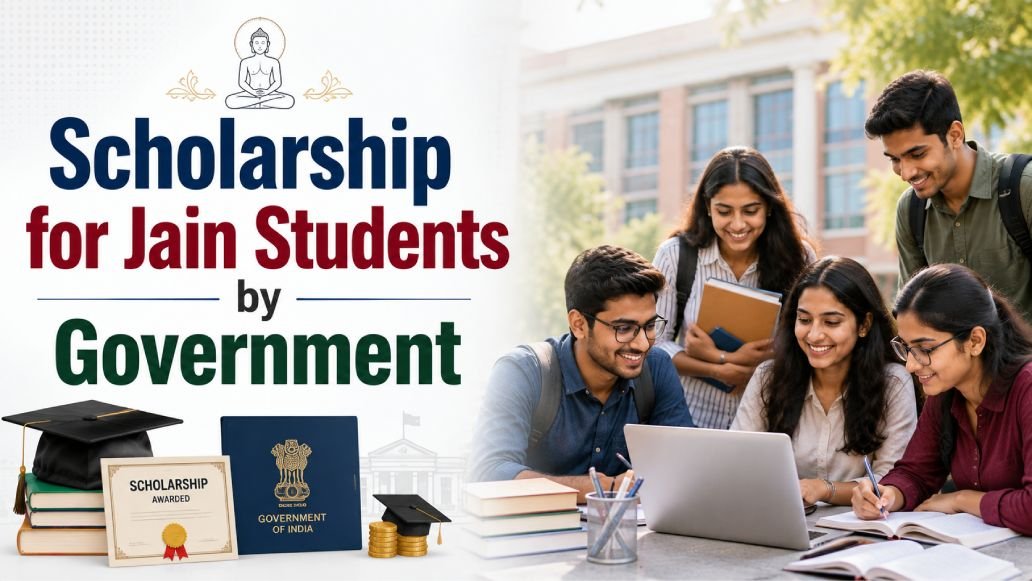
A scholarship for Jain students by government can help eligible students pay for school, college, professional education, or higher studies in India.
Jain students have an important legal advantage when checking minority scholarship schemes. The Government of India officially notified the Jain community as a minority community on January 27, 2014. Jains joined Muslims, Christians, Sikhs, Buddhists, and Parsis as one of India’s six centrally notified minority communities. The notification is confirmed by the National Commission for Minorities.
However, minority status does not automatically mean that every historic minority scholarship is currently accepting applications.
This distinction is especially important in 2026–27.
The Ministry of Minority Affairs stated in August 2025 that its educational empowerment schemes include the Pre-Matric Scholarship, Post-Matric Scholarship, and Merit-cum-Means Scholarship for the six notified minority communities, including Jains.
At the same time, the live National Scholarship Portal scheme list for academic year 2026–27 does not currently display these Ministry of Minority Affairs schemes among its listed central schemes.
Important 2026–27 update: Jain students remain a legally recognized minority community. However, students should verify whether a particular central minority scholarship is actually open on the current National Scholarship Portal before relying on an old deadline, application form, or blog post.
Jain students should also look beyond minority-only scholarships.
Several central and state government scholarships are community-neutral. A Jain student can qualify for these programs through merit, income, domicile, course, disability, or other eligibility criteria.
This guide explains both routes.
Are Jain Students Eligible for Government Minority Scholarships?
Yes. Jain students belong to one of India’s six centrally notified minority communities.
The Central Government formally notified the Jain community as a minority under Section 2(c) of the National Commission for Minorities Act, 1992, on January 27, 2014.
This status can make Jain students eligible for schemes that explicitly cover India’s notified minority communities.
Eligibility still depends on the individual scholarship.
A student may also need to satisfy requirements related to:
- annual family income;
- marks in the previous examination;
- class or study level;
- university or institution;
- regular enrollment;
- state domicile;
- course type;
- minority/community documentation;
- bank account;
- Aadhaar authentication; and
- application deadline.
Minority status is therefore one eligibility attribute rather than an automatic scholarship award.
Is There a Government Scholarship Specifically for Jain Students?
There is no single national scholarship called simply the “Jain Government Scholarship.”
Instead, Jain students can access two broad categories of government funding.
The first category includes minority-focused schemes in which Jain students are explicitly included alongside other notified minority communities.
The second category includes general government scholarships that do not use religion as an eligibility condition but remain open to Jain students who meet merit, income, course, or other requirements.
This difference expands the number of opportunities a Jain student should consider.
Government Scholarships for Jain Students at a Glance
| Scholarship or Scheme | Jain Students Eligible? | Study Level | Main Financial Rule | Approximate Benefit in USD | 2026–27 Position |
|---|---|---|---|---|---|
| Central Pre-Matric Minority Scholarship | Yes, under minority eligibility | Classes IX–X under revised central scope | Historical ceiling approx. USD 1,054 annual family income | Depends on applicable notification | Ministry describes scheme, but not currently visible on live 2026–27 NSP central list |
| Central Post-Matric Minority Scholarship | Yes | Class XI to higher education | Historical ceiling approx. USD 2,109 | Varies by course and study mode | Verify live availability |
| Central Merit-cum-Means Minority Scholarship | Yes | Eligible professional/technical UG and PG programs | Historical ceiling approx. USD 2,636 | Varies by course/institution | Verify live availability |
| PM-USP CSSS | Yes, but not because of religion | Undergraduate/higher education | Approx. USD 4,745 family income ceiling | Approx. USD 127–211 annually depending on year | Renewal applications shown on NSP |
| Maharashtra Minority Higher/Professional Scholarship | Yes, Jain explicitly listed | Professional/technical graduation and PG | Approx. USD 8,435 family income ceiling | Up to approx. USD 527 annually | Official scheme page available |
| Kerala Margadeepam | Yes, Jain explicitly listed | Classes I–VIII | Approx. USD 2,636 family income ceiling | Approx. USD 16 | Latest visible scheme information is for 2025–26 |
| Gujarat Post-SSC Minority Scholarship | Yes, Jain explicitly listed | Class XI to PhD | Approx. USD 2,109 family income ceiling | Maintenance plus eligible fees | State scheme page updated July 2026 |
| West Bengal Minority Scholarship | Yes, Jain explicitly listed | Classes IX to PhD | Depends on Pre/Post-Matric category | Varies | State information updated in 2026 |
Currency note: Approximate USD equivalents use the September 1, 2026 exchange rate of about 1 INR = 0.0105438 USD. Government schemes normally approve and pay benefits in Indian currency, so the USD values are only comparative estimates.
Important 2026–27 Update on Central Minority Scholarships
Students should distinguish between a government scheme existing in official policy material and a scheme currently available for application.
The Ministry of Minority Affairs stated in August 2025 that it implements Pre-Matric, Post-Matric, and Merit-cum-Means scholarships for Muslims, Sikhs, Christians, Buddhists, Parsis, and Jains.
A separate April 2025 government release also described these three scholarship schemes as educational empowerment programs of the Ministry of Minority Affairs.
However, the current National Scholarship Portal is displaying the 2026–27 academic year, and the live central scheme inventory currently does not show the Ministry of Minority Affairs or its three minority scholarship schemes.
Does This Mean the Jain Minority Scholarship Has Been Permanently Discontinued?
No permanent-discontinuation conclusion should be drawn from the absence of a scheme on the current application list alone.
Official Ministry material still describes the three minority scholarship programs.
The safer interpretation is:
The scheme exists in government policy information → current application availability must still be verified separately.
Students should not use an application deadline from 2021, 2022, 2023, or another previous cycle and assume that it applies to 2026–27.
Check the live National Scholarship Portal before preparing a central application.
Pre-Matric Scholarship for Jain Minority Students
The Central Pre-Matric Scholarship historically provides educational assistance to economically weaker students from India’s notified minority communities.
Jain students are included within the notified-minority definition.
The scope of the central Pre-Matric scheme changed from the 2022–23 academic year.
The Ministry of Minority Affairs stated that central Pre-Matric scholarship coverage for Classes I to VIII was discontinued because the Right to Education framework provides free and compulsory elementary education.
The central scheme therefore covers Classes IX and X under the revised structure.
Earlier scheme criteria included:
- membership in a notified minority community;
- at least 50% marks in the previous examination; and
- annual parental or guardian income not exceeding approximately USD 1,054.
These eligibility figures describe the published scheme framework. Students must confirm the applicable 2026–27 notification before applying.
Post-Matric Scholarship for Jain Students
The Post-Matric Scholarship was designed for minority students studying after Class X.
Historically, the scheme covered education from:
- Class XI;
- Class XII;
- undergraduate study;
- postgraduate study;
- technical and vocational courses; and
- PhD-level education.
The published eligibility framework required students to belong to a notified minority community, secure at least 50% marks in the previous final examination, and remain within an annual parental or guardian income ceiling equivalent to approximately USD 2,109.
The Post-Matric route has historically been particularly important because it covers a much wider range of education levels than Pre-Matric assistance.
For 2026–27, students should verify application availability on the live government portal before submitting documents.
Merit-cum-Means Scholarship for Jain Students
The Merit-cum-Means Scholarship combines academic merit with financial need.
The scheme historically supported students from notified minority communities pursuing eligible professional and technical courses at undergraduate and postgraduate levels.
Published criteria included:
- membership in a notified minority community;
- at least 50% marks in the previous examination;
- admission to an eligible professional or technical program; and
- family income not exceeding approximately USD 2,636 per year.
The Ministry later rationalized overlapping professional-course coverage.
A 2024 government statement said technical and professional UG/PG courses were generally brought under the Post-Matric Scheme, while Merit-cum-Means coverage focused on listed institutions.
This change makes current scheme-specific verification essential.
PM-USP Central Sector Scholarship for Jain College Students
The PM-USP Central Sector Scheme of Scholarship for College and University Students, or CSSS, is not a Jain minority scholarship.
It is a merit-cum-means scholarship open to eligible Indian students regardless of religion.
Jain students can therefore qualify on the same basis as other eligible applicants.
The Ministry of Education’s published criteria require applicants to:
- rank above the 80th percentile among successful Class XII candidates in the relevant stream and board;
- pursue a regular course;
- have annual family income up to approximately USD 4,745;
- avoid correspondence or distance-mode study;
- not be diploma students;
- not have taken a drop after Class XII; and
- satisfy the scheme’s rules concerning other scholarship or fee-reimbursement benefits.
How Much Does PM-USP Provide?
The published scholarship rate is approximately:
- USD 127 per year during the first three years of graduation; and
- USD 211 per year during the fourth and fifth years where applicable.
The scheme traditionally provides 82,000 fresh scholarships each year, divided among education boards according to the scheme’s allocation method.
The live NSP currently shows PM-USP CSSS renewal activity for academic year 2026–27. Students should check the current scheme card for the latest deadline because portal announcements can be updated.
Maharashtra Government Scholarship for Jain Students
Maharashtra provides one of the clearest examples of a state government scheme that explicitly names Jain students.
The Maharashtra Minority Development Department’s Scholarship for Student Communities Pursuing Higher and Professional Courses lists Muslim, Buddhist, Christian, Jain, Sikh, Parsi, and Jewish students among the eligible communities.
Maharashtra Scholarship Eligibility
The published conditions include:
- Indian nationality;
- Maharashtra domicile;
- passing SSC from Maharashtra;
- enrollment as a bona fide student;
- admission to an eligible professional or technical graduation or postgraduate course;
- applicable admission through CAP or institution-level procedures;
- no simultaneous scholarship or stipend under the stated restriction;
- annual family or guardian income not exceeding approximately USD 8,435; and
- a maximum of two children from one family receiving the benefit under the scheme.
Maharashtra Scholarship Amount
The scholarship covers the eligible annual course fee up to a maximum equivalent of approximately USD 527 per year, whichever qualifying amount is lower.
Students should use the official MahaDBT minority scholarship page to check the active application window and current instructions.
Maharashtra Documents
The official scheme page lists documents such as:
- SSC and HSC educational certificates;
- subsequent academic records;
- parent income certificate or applicable income evidence;
- minority-community information in the required income certificate or affidavit;
- Maharashtra residence proof;
- Aadhaar;
- previous year’s mark sheet; and
- applicable fee-related documentation.
Kerala Margadeepam Scholarship for Jain Students
Kerala’s Margadeepam Scholarship provides a separate state-level route for younger minority students.
The official Directorate of Minority Welfare portal explicitly includes Jain students among the eligible notified minority communities.
The scheme is designed for students in Classes I to VIII studying in government or government-aided schools in Kerala.
Margadeepam Scholarship Amount
The published scholarship amount is approximately USD 16 per student.
The annual family-income ceiling is approximately USD 2,636.
Required evidence includes:
- family income certificate;
- community or minority certificate;
- bank passbook;
- disability certificate where applicable; and
- relevant death certificate in specified circumstances.
The portal states that these documents are kept by the head of the educational institution rather than necessarily uploaded with the application.
Current-status note: The latest visible Margadeepam notification on the official portal relates to 2025–26. Jain families seeking the 2026–27 cycle should monitor the official Margadeepam portal for a new notification rather than reusing the previous year’s deadline.
Gujarat Government Post-SSC Scholarship for Jain Students
The Government of Gujarat provides a Post-SSC Scholarship for minority students.
The official scheme page explicitly identifies:
- Muslims;
- Christians;
- Sikhs;
- Buddhists;
- Jains; and
- Parsis
as eligible religious minorities.
The scheme covers students studying in:
- Class XI;
- Class XII;
- undergraduate programs;
- postgraduate programs; and
- PhD programs.
The annual income ceiling is approximately USD 2,109.
Gujarat Scholarship Amount
Published maintenance rates vary by education level and whether the student is a hosteller or day scholar.
Approximate monthly USD equivalents range from around USD 2.43 to USD 12.65, depending on category.
Eligible admission and tuition assistance can also reach approximately USD 32 to USD 105, subject to the published course limits.
The Government of Gujarat minority scholarship page was last updated on July 17, 2026.
Students should follow the latest application instructions displayed by the state rather than depending on an older third-party application link.
West Bengal Government Scholarship for Jain Students
West Bengal also identifies Jain students as eligible members of the state’s recognized minority communities.
The state’s published scholarship information covers students from Class IX through PhD level, depending on the Pre-Matric or Post-Matric category.
The published criteria include:
- recognized minority-community membership;
- at least 50% marks in the previous final examination;
- annual family income within the scheme limit;
- study at a recognized institution; and
- restrictions on receiving another scholarship.
The published income limits are approximately:
- USD 1,054 annually for the applicable Pre-Matric category; and
- USD 2,109 annually for the Post-Matric category.
Approved assistance is paid through Direct Benefit Transfer.
Students in West Bengal should check the official West Bengal minority scholarship information for current eligibility and submission instructions.
Which Jain Students Should Apply for Government Scholarships?
A Jain student should apply when the student’s profile matches the scholarship’s mandatory criteria.
Strong candidates commonly include students who:
- belong to the Jain community where minority status is required;
- meet the family’s income ceiling;
- have the required academic marks;
- live in the required state;
- study at an eligible institution;
- pursue an eligible class or degree;
- have the required minority/community documentation;
- maintain a valid bank account;
- complete Aadhaar or OTR requirements where applicable; and
- can submit the application during the official application period.
Students should also search for government scholarships that do not use religion as an eligibility factor.
A Jain student with strong Class XII marks, for example, may be better matched to PM-USP than to an unavailable minority scheme.
Who Should Not Apply?
Students should not submit an application merely because the scholarship includes the Jain community.
Do not apply when a mandatory condition clearly excludes your profile.
Common examples include:
- family income above the published ceiling;
- marks below the minimum requirement;
- residence outside the required state;
- enrollment in an excluded institution;
- enrollment in an excluded course;
- distance education where only regular study is eligible;
- already receiving an incompatible scholarship;
- failure to meet fresh or renewal conditions;
- missing minority/community evidence where required; or
- an application window that has already closed.
Submitting an obviously ineligible application wastes time and can prevent the applicant from focusing on better opportunities.
Eligibility Criteria for Government Scholarships for Jain Students
Government scholarship eligibility usually combines several attributes.
| Requirement | What It Establishes | Common Proof |
|---|---|---|
| Jain/minority status | Community eligibility | Minority/community certificate or accepted declaration |
| Family income | Financial need | Income certificate |
| Academic marks | Merit eligibility | Mark sheet |
| Domicile | State eligibility | Domicile/residence certificate |
| Study level | Correct scholarship category | Admission/enrollment records |
| Institution | Recognition and participation | Bonafide certificate |
| Course | Scheme coverage | Admission letter/course details |
| Aadhaar | Identity/portal verification | Aadhaar record |
| Bank account | DBT eligibility | Bank passbook/account details |
| Previous scholarship status | Duplicate-benefit restriction | Declaration/portal data |
| Renewal performance | Continued eligibility | Latest mark sheet |
A student must normally satisfy all mandatory conditions, not simply the majority of them.
Is a Jain Minority Certificate Required for a Government Scholarship?
A Jain minority certificate may be required, but the exact document depends on the scheme and state.
There is no single document checklist that applies to every government scholarship in India.
For example, Kerala’s Margadeepam scheme explicitly lists a Community Certificate or Minority Certificate issued by the Village Officer among its required documents.
Maharashtra’s scheme requires the relevant minority-community information to appear in the prescribed income certificate or affidavit documentation.
Applicants should therefore follow the official document requirements of the exact scholarship.
Do not assume that a document accepted in Maharashtra will automatically satisfy a Kerala, Gujarat, West Bengal, or central-government application.
Required Documents for Jain Government Scholarships
Documents prove that the applicant satisfies the scholarship’s factual requirements.
The exact list varies.
Identity Documents
Applicants commonly need:
- Aadhaar;
- recent photograph;
- date-of-birth information; and
- student identity details.
The name, date of birth, and other personal details should remain consistent across all records.
Jain Minority or Community Proof
Where required, applicants may need:
- minority certificate;
- community certificate; or
- another declaration accepted by the competent state authority.
Use the document specifically requested in the official guidelines.
Academic Documents
Common academic evidence includes:
- previous examination mark sheet;
- Class X certificate;
- Class XII certificate;
- current semester result;
- admission letter;
- enrollment certificate; and
- bonafide student certificate.
The latest mark sheet is particularly important for merit thresholds and renewals.
Income Documents
Need-based programs normally require a valid family-income certificate.
The competent issuing authority can vary by state.
Applicants should ensure that:
- the certificate covers the required financial period;
- the applicant’s family details match the application;
- the income does not conflict with other uploaded records; and
- the certificate remains valid under the current scheme rules.
Domicile and Residence Documents
State scholarships commonly require proof that the student belongs to the relevant state.
Possible documents include:
- domicile certificate;
- residence certificate;
- voter-related residence proof where permitted; or
- another state-approved document.
Bank Documents
Scholarship payments frequently use Direct Benefit Transfer.
Applicants may need:
- bank passbook;
- account number;
- IFSC information;
- applicant-name confirmation; and
- Aadhaar-linked or Aadhaar-seeded account details where required.
A bank account belonging to the wrong person can create payment problems.
Institution and Fee Documents
Depending on the scheme, students may need:
- admission receipt;
- fee receipt;
- bonafide certificate;
- course details;
- institute code; and
- proof of regular enrollment.
Jain Scholarship Document Checklist
| Document | Ready? | Details Match Application? |
|---|---|---|
| Aadhaar | ☐ | ☐ |
| Minority/community proof | ☐ | ☐ |
| Income certificate | ☐ | ☐ |
| Domicile/residence certificate | ☐ | ☐ |
| Previous mark sheet | ☐ | ☐ |
| Class X certificate | ☐ | ☐ |
| Class XII certificate if applicable | ☐ | ☐ |
| Admission letter | ☐ | ☐ |
| Bonafide certificate | ☐ | ☐ |
| Fee receipt | ☐ | ☐ |
| Bank passbook | ☐ | ☐ |
| Recent photograph | ☐ | ☐ |
| Disability certificate if applicable | ☐ | ☐ |
| Renewal documents if applicable | ☐ | ☐ |
The official scholarship notification always takes priority over this general checklist.
Step-by-Step Application Guide for Jain Government Scholarships
Step 1: Identify Your Scholarship Category
First determine why you qualify.
Your route may be:
Jain minority status → minority scholarship
or:
academic merit/income/other criteria → general government scholarship
Do not limit your search to scholarships with “Jain” in their titles.
Step 2: Check Your State and Study Level
Identify:
- state of domicile;
- current class;
- course;
- institution;
- study mode; and
- academic year.
A Class VIII student in Kerala has a different opportunity set from an engineering student in Maharashtra or a university student eligible for PM-USP.
Step 3: Verify the Scheme on an Official Government Portal
Search for the current scholarship using:
- National Scholarship Portal;
- state scholarship portal;
- state minority department; or
- official government department website.
Confirm that the page refers to the correct academic year.
This step is crucial in 2026 because some central minority schemes remain described in government publications while not appearing on the current NSP central-scheme inventory.
Step 4: Compare Your Profile With Every Eligibility Condition
Create a personal eligibility table.
| Requirement | Your Position |
|---|---|
| Jain/minority status | Eligible / Not eligible |
| Annual income | Eligible / Not eligible |
| Marks | Eligible / Not eligible |
| Domicile | Eligible / Not eligible |
| Course | Eligible / Not eligible |
| Institution | Eligible / Not eligible |
| Study mode | Eligible / Not eligible |
| Other scholarship restriction | Eligible / Not eligible |
| Application date | Eligible / Not eligible |
Do not continue if a mandatory condition clearly fails.
Step 5: Complete OTR When Applying Through NSP
The National Scholarship Portal requires One Time Registration, or OTR.
NSP states that OTR is mandatory for scholarship applications and remains the student’s unique registration number throughout the academic career.
Students should complete OTR using the official National Scholarship Portal student section.
Step 6: Prepare Documents Before Starting the Form
Create digital copies of every required document.
Use:
- clear scans;
- correct file formats;
- readable text;
- consistent names; and
- valid certificates.
Do not upload unrelated or expired documents simply to fill a required field.
Step 7: Complete the Application Carefully
Enter information exactly as it appears in official documents.
Check:
- name spelling;
- date of birth;
- Aadhaar details;
- family income;
- institution;
- course;
- academic marks;
- bank details; and
- scholarship category.
A small data mismatch can delay verification.
Step 8: Review the Application Before Final Submission
Do not treat the “Submit” button as a routine step.
Review each field.
Compare the application with your:
- Aadhaar;
- mark sheet;
- income certificate;
- bank passbook; and
- admission documents.
Correct errors before locking the application wherever the portal allows.
Step 9: Complete Institution Verification
Submitting the online form does not always complete the process.
Many government scholarships require the educational institution to verify:
- enrollment;
- academic information;
- course;
- fee details; and
- student identity.
Students should monitor whether the institute has verified and forwarded the application.
Step 10: Track Verification and Payment
After submission, monitor each stage.
A typical process is:
Application submitted → institute verification → district/state/nodal verification → selection/sanction → DBT payment
Save your:
- application ID;
- OTR;
- acknowledgment;
- confirmation messages; and
- screenshots of the submitted application.
How Does the Jain Scholarship Selection Process Work?
Government scholarships normally use rule-based evaluation.
Religion alone does not determine the winner.
Eligibility Screening
The portal or scholarship authority first checks mandatory conditions.
These can include:
- community;
- income;
- marks;
- class;
- course;
- domicile; and
- institution.
An applicant who fails a mandatory criterion may be rejected before deeper evaluation.
Document Verification
Authorities verify whether the submitted evidence supports the information in the form.
The application can be returned as defective when a correctable document or data problem exists.
Institute Verification
The educational institution may confirm:
- that the applicant actually studies there;
- the student’s course;
- academic year;
- fees;
- admission status; and
- other institutional information.
Failure at this stage can prevent the application from reaching the next authority.
Merit and Income Assessment
Merit-based schemes rank or filter students according to academic performance.
Need-based schemes evaluate household income.
Merit-cum-means programs use both.
Scheme Quota or Budget Availability
Meeting minimum eligibility does not always guarantee payment.
Some scholarships have:
- limited slots;
- state allocations;
- board-wise quotas;
- gender earmarking;
- institution limits; or
- budget constraints.
Selection can therefore be competitive.
Final Sanction and DBT
Approved scholarships are sanctioned after verification.
Government programs commonly use Direct Benefit Transfer to send the approved amount to the eligible bank account.
Fresh vs Renewal Scholarship Applications
A fresh application is filed by a student seeking the scholarship for the first time.
A renewal application continues an existing scholarship into the next eligible academic period.
| Attribute | Fresh Application | Renewal Application |
|---|---|---|
| Applicant | First-time applicant | Existing beneficiary |
| Eligibility | Entry requirements | Continued eligibility |
| Academic records | Previous qualifying exam | Latest year/semester result |
| Income evidence | Usually required | May require updated proof |
| Community proof | As required | May already exist but rules vary |
| Academic performance | Entry threshold | Renewal/continuation threshold |
| Application window | Fresh deadline | Renewal deadline may differ |
Never assume that a previous award renews automatically.
Check the current renewal rules.
Can Jain Students Apply for More Than One Government Scholarship?
Applying to multiple programs is not always the same as receiving multiple awards.
The National Scholarship Portal currently states that from academic year 2026–27, students may apply for one merit-based scholarship and one or more welfare-based scholarship schemes, subject to each scheme’s eligibility conditions.
However, individual schemes can impose stricter conditions.
For example, PM-USP’s published eligibility framework states that applicants should not be receiving another scholarship or fee reimbursement.
Maharashtra’s minority higher/professional scholarship also states that the applicant should not avail another scholarship or stipend under its rules.
Therefore:
Portal-level permission does not override scheme-level restrictions.
Always check the specific award conditions before accepting overlapping benefits.
Common Mistakes Jain Scholarship Applicants Make
Searching Only for “Jain Scholarship”
This search strategy is too narrow.
A Jain student may qualify for:
- minority scholarships;
- merit scholarships;
- state scholarships;
- university-level government support;
- scholarships for particular courses;
- scholarships for students with disabilities; and
- community-neutral national schemes.
Search according to eligibility attributes, not religion alone.
Assuming an Old Central Minority Scheme Is Open Now
This is particularly risky in 2026–27.
The Ministry describes three educational scholarship schemes for minorities, but these programs are not currently visible in the live NSP central list.
Always check the live portal.
Using an Old Deadline
Scholarship dates change every academic year.
A deadline found in an old article, YouTube video, forum post, or previous government notice may be invalid.
Confirm the academic year before applying.
Confusing Minority Recognition With Automatic Eligibility
Jain minority status satisfies only the community criterion.
The student may still fail:
- income;
- marks;
- domicile;
- course;
- institution; or
- deadline requirements.
Uploading the Wrong Minority Document
States can use different certification procedures.
Use the certificate or declaration specified by the relevant authority.
Providing an Expired Income Certificate
Income certificates often need to meet current validity rules.
Obtain updated financial evidence when required.
Entering Incorrect Bank Details
Incorrect account information can block DBT.
Match the account holder’s name and bank information with the scholarship instructions.
Ignoring Institution Verification
An online submission can remain incomplete if the institution never verifies it.
Track the application after submission.
Applying Under an Incompatible Scholarship Combination
Some programs prohibit simultaneous scholarship benefits.
Read the scheme’s restrictions before accepting another award.
Waiting Until the Final Day
Last-day applications can fail because of:
- OTR problems;
- Aadhaar authentication;
- portal traffic;
- unavailable certificates;
- document-format errors; or
- missing institute information.
Prepare early.
Why Can a Jain Scholarship Application Be Rejected?
Not every unsuccessful application fails for the same reason.
Ineligible
The student does not satisfy a mandatory condition.
Examples include excessive family income or an excluded course.
Defective
The application has a potentially correctable problem.
Examples include:
- unclear document;
- wrong certificate;
- data mismatch; or
- incomplete field.
Not Verified
The institution or another verification authority did not complete the required approval stage.
Rejected
An authority determined that the application did not satisfy the scheme rules.
Eligible but Not Selected
A student may meet minimum requirements but still lose when available scholarships, quotas, or funds are limited.
Understanding the status helps the applicant decide whether to correct, appeal, wait, or pursue another scholarship.
How to Check Jain Scholarship Application Status
Applicants should use the same official portal through which the application was submitted.
Track:
- submitted status;
- institute verification;
- district or state verification where applicable;
- nodal approval;
- scholarship sanction; and
- payment status.
NSP applicants should retain their OTR and application information.
Do not share:
- Aadhaar number;
- OTP;
- password;
- PIN; or
- bank credentials
with unofficial scholarship agents.
The National Scholarship Portal itself warns students not to enter personal banking, Aadhaar, password, PIN, or OTP information into its chatbot.
Previous Years’ Trends for Jain Government Scholarships
Historical government data proves that Jain students have received minority scholarships in significant numbers.
Jain Students Became Centrally Recognized Minority Beneficiaries After 2014
Jains were officially notified as India’s sixth centrally recognized minority community in January 2014.
That status placed Jain students within the eligibility universe of national minority educational programs, subject to each scheme’s other criteria.
More Than 236,000 Jain Awards Were Recorded Across Three Major Schemes in a Three-Year Period
Government data covering 2018–19 through 2020–21 recorded:
- 183,391 Pre-Matric scholarships for Jain students;
- 43,419 Post-Matric scholarships for Jain students; and
- 9,849 Merit-cum-Means scholarships for Jain students.
That produces more than 236,000 awards across those three scholarship categories during the reported period.
This historical evidence is important because it confirms that Jain eligibility under minority scholarship programs was operational rather than merely theoretical.
Minority Scholarship Volumes Were Historically Large
Across all eligible minority communities, the government reported millions of annual beneficiaries.
For example, 2021–22 figures included approximately:
- 5.71 million Pre-Matric beneficiaries;
- 720,093 Post-Matric beneficiaries; and
- 131,810 Merit-cum-Means beneficiaries.
These numbers show how significant the central minority scholarship ecosystem became before later policy rationalization.
Pre-Matric Eligibility Changed After 2021–22
The central Pre-Matric scheme originally extended to Classes I–X.
The government discontinued central scholarship coverage for Classes I–VIII from 2022–23 and retained Classes IX–X under the revised scheme framework.
This explains why old articles describing central Pre-Matric assistance for Classes I–VIII are now outdated.
State governments can still operate their own programs for younger students.
Kerala’s Margadeepam Scholarship is one example.
Some Minority Higher-Education Programs Were Rationalized
The Ministry also changed overlapping higher-education support.
Professional and technical courses were reorganized between Post-Matric and Merit-cum-Means coverage.
The Maulana Azad National Fellowship was discontinued for new awards from 2022–23 because the government considered it overlapping with other fellowship schemes open to minority students.
This historical trend explains why scholarship articles written several years ago can contain programs that no longer operate in the same form.
Research Notes: What Jain Students Should Know in 2026–27
Our review of current government sources produces several practical conclusions.
“Jain Scholarship” Is Not One Scholarship
The search phrase describes an eligibility ecosystem, not one program.
A student’s opportunity set depends on:
Jain status + state + study level + income + marks + institution + course + current scheme availability
This model is more useful than searching for a single universal Jain scholarship form.
Minority Status and Current Availability Are Different Facts
Jains are unquestionably a centrally notified minority.
That fact is current.
Central scholarship application availability is a separate question.
A government scheme can still appear in policy documents while its current application window is not displayed on NSP.
Students should verify both facts separately.
State Schemes Can Be More Actionable Than Central Minority Schemes
In the current research environment, state schemes provide some of the clearest actionable opportunities.
Maharashtra explicitly lists Jain students under minority higher/professional education assistance.
Kerala explicitly includes Jain students under Margadeepam.
Gujarat explicitly includes Jain students under Post-SSC minority assistance.
West Bengal also explicitly recognizes Jain applicants within its minority scholarship structure.
Jain Students Should Search Community-Neutral Scholarships Too
Religion-specific search queries can unintentionally reduce scholarship discovery.
PM-USP is a useful example.
The scholarship does not require Jain status.
A Jain student can qualify through academic performance, family income, and regular college enrollment.
Students should therefore search across both:
minority eligibility + general student eligibility
The Best Scholarship Search Starts With the Student Profile
Use this sequence:
State → study level → course → family income → academic marks → special eligibility → live government portal
Then check whether Jain minority status unlocks an additional scheme.
This method reduces irrelevant applications.
Live Government Portals Should Override Old Blog Deadlines
Scholarship articles are useful for discovery and explanation.
Government portals should determine:
- whether a scheme is open;
- deadline;
- current amount;
- application channel;
- required documents; and
- verification process.
This is particularly important when scholarship policies are changing.
How to Find the Best Government Scholarship as a Jain Student
Use several search patterns instead of repeating one keyword.
| Your Situation | Better Search Approach |
|---|---|
| School student | minority scholarship + state + class |
| Class X student | government scholarship after 10th + state |
| Class XII student | government scholarship after 12th + state |
| College student | undergraduate government scholarship + course |
| Professional student | professional course scholarship + state |
| Low-income student | need-based government scholarship + state |
| High-scoring student | merit scholarship + course + government |
| Jain minority applicant | Jain minority scholarship + state |
| NSP applicant | current NSP schemes + academic year |
| Existing beneficiary | scholarship renewal + scheme name |
The student’s attributes should drive the search.
Frequently Asked Questions About Government Scholarships for Jain Students
Is Jain a minority in India for scholarship purposes?
Yes. The Central Government officially notified the Jain community as a minority on January 27, 2014 under the National Commission for Minorities Act. Jain students can therefore satisfy the minority-community requirement of schemes covering India’s notified minorities, but they must still meet income, marks, domicile, course, and other scholarship conditions.
Is there a government scholarship only for Jain students?
Most government programs are not exclusively for Jain students. Jain students are commonly included with Muslims, Christians, Sikhs, Buddhists, and Parsis under minority schemes. Jain students can also apply for community-neutral government scholarships when they satisfy academic, financial, domicile, course, disability, or other published eligibility requirements.
Which government scholarships can Jain students apply for in 2026–27?
Possible routes include state minority programs in Maharashtra, Gujarat, Kerala, and West Bengal, plus community-neutral programs such as PM-USP. Central minority Pre-Matric, Post-Matric, and Merit-cum-Means programs remain described by the Ministry, but students should verify their current application availability on the 2026–27 National Scholarship Portal.
Is the Jain minority scholarship available on NSP in 2026–27?
As of September 1, 2026, the live NSP central-scheme list does not display the Ministry of Minority Affairs’ Pre-Matric, Post-Matric, or Merit-cum-Means schemes. This does not prove permanent discontinuation. Jain students should monitor the live portal and Ministry announcements instead of relying on an old application date.
Can Jain students apply for the Post-Matric Scholarship?
Historically, yes. Jain students are one of the six notified minority communities covered under the central Post-Matric framework. Published rules covered Class XI through higher education with academic and income conditions. For 2026–27, applicants should first verify whether the central scheme is currently accepting applications or whether a state alternative applies.
Can Jain students apply for Merit-cum-Means Scholarship?
Jain students fall within the minority-community definition used by the Merit-cum-Means scheme. The published framework has supported eligible professional and technical education with merit and family-income conditions. However, course coverage was later rationalized, and the scheme is not currently visible on the live 2026–27 NSP central list.
What is the income limit for a Jain minority scholarship?
There is no universal Jain scholarship income limit. Historical central limits were approximately USD 1,054 for Pre-Matric, USD 2,109 for Post-Matric, and USD 2,636 for Merit-cum-Means. State schemes use different thresholds. Maharashtra’s cited professional-course minority scheme permits family income up to approximately USD 8,435 annually.
Is a Jain minority certificate required for scholarships?
Some schemes require formal community or minority evidence, while others use different declarations or verification procedures. Kerala’s Margadeepam scheme explicitly lists a Community Certificate or Minority Certificate. Applicants should follow the exact official document checklist for their state and scholarship instead of assuming one certificate format works across India.
What documents are required for a Jain government scholarship?
Typical documents include Aadhaar, income certificate, minority or community proof where required, domicile certificate, previous mark sheets, admission evidence, bonafide certificate, fee receipt, bank passbook, and photograph. Additional documents can apply according to the scheme. Applicants should always compare their file against the latest official notification before submitting.
Can Jain students get a government scholarship after Class 10?
Yes. Eligible Jain students can investigate Post-Matric minority assistance, state government scholarships, and other Class XI or diploma-level programs after Class X. Eligibility depends on the student’s state, marks, annual family income, school or institution, course, and current scheme status. The official portal should confirm whether fresh applications are open.
Can Jain students get a scholarship after Class 12?
Yes. Jain students can pursue minority scholarships where active and general government programs such as PM-USP when eligible. Professional-course and state scholarship options may also apply. Students should search using their degree, domicile, marks, family income, and institution rather than limiting scholarship discovery to programs containing the word “Jain.”
Can Jain college students receive government scholarships?
Yes. College students can qualify through central, state, minority, merit, need-based, professional-course, or other government programs. PM-USP can support eligible meritorious students regardless of religion. Maharashtra also lists Jain students under a minority higher and professional education scheme. Every applicant must satisfy the relevant course and institution requirements.
Can a Jain student receive two government scholarships?
Not automatically. NSP currently allows applications for one merit-based scheme and one or more welfare-based schemes from 2026–27, subject to scheme rules. Individual programs can still prohibit simultaneous benefits. Students should therefore distinguish permission to apply from permission to receive or retain multiple scholarships at the same time.
How can I check my Jain scholarship application status?
Use the official portal through which you submitted the application. Track submission, institute verification, state or nodal verification, sanction, and DBT payment stages. NSP applicants should keep their OTR and application information secure. Contact the relevant institution or scholarship authority when an application remains unverified beyond the published processing stage.
Why is the Jain minority scholarship not showing on NSP?
The current 2026–27 NSP central list does not display the Ministry of Minority Affairs’ three traditional minority scholarship schemes even though Ministry publications continue to describe them. Students should not interpret this alone as a permanent cancellation. Scheme onboarding, application windows, policy changes, or other administrative factors can affect portal visibility.
Are state government scholarships available specifically to Jain students?
Yes. Several states explicitly include Jain students within minority educational assistance. Maharashtra, Gujarat, Kerala, and West Bengal provide documented examples. Eligibility varies substantially by domicile, study level, income, institution, and course. A student should therefore search the official scholarship or minority-welfare portal of the state where eligibility is established.
Are Jain students eligible for PM-USP?
Yes, when they satisfy the normal PM-USP criteria. Jain religion is neither required nor a disadvantage because PM-USP is community-neutral. Published eligibility includes high Class XII percentile performance, regular higher education, family income within the scheme ceiling, and other conditions concerning course type and competing scholarship or fee-reimbursement benefits.
How are Jain government scholarship recipients selected?
Selection normally begins with eligibility screening and document verification. The institution may verify enrollment before the application moves to state or nodal authorities. Depending on the scheme, academic merit, family income, available slots, quotas, and budget can affect final selection. Eligibility alone does not always guarantee a scholarship award.
Conclusion
A scholarship for Jain students by government is not one single program.
Jain students can access a wider scholarship ecosystem because the Jain community has been a centrally notified minority in India since January 27, 2014.
That status can support eligibility for minority schemes.
It does not automatically guarantee funding.
Students must still check:
- current scheme availability;
- annual family income;
- academic marks;
- domicile;
- course;
- institution;
- community documentation;
- application deadline;
- verification requirements; and
- renewal conditions.
The most important lesson for 2026–27 is to separate historical scholarship information from current application availability.
The Ministry of Minority Affairs continues to describe Pre-Matric, Post-Matric, and Merit-cum-Means educational scholarship programs for India’s six notified minorities. However, those programs are not currently visible on the live 2026–27 NSP central scheme list. Students should therefore monitor official portals instead of relying on old application dates.
State-level opportunities can provide additional routes.
Maharashtra, Gujarat, Kerala, and West Bengal all have official scholarship information explicitly covering Jain minority students.
Jain students should also investigate community-neutral schemes such as PM-USP.
The most effective scholarship strategy is:
identify your state → identify your study level → calculate eligibility → verify the current official scheme → prepare documents → apply → complete verification → track DBT → check renewal rules.

You may like

Check Student Scholarship Status Online: SSP Karnataka Application and Payment Status

Government Scholarship for College Students 2022 in India: Eligibility, Amount, and Application Guide

Digital Gujarat Scholarship for OBC Students 2026 to 27: Eligibility, Amount, Last Date and Application Guide

Turkey Burslari Scholarship 2026: Eligibility, Benefits, Deadline, Interview, and Results

SBI Asha Scholarship 2026-27: Eligibility, Amount, Last Date and Apply Online

Scholarship for J&K Students: Eligibility, Amount, Deadlines, and How to Apply
Trending
-
 Scholarships2 months ago
Turkey Burslari Scholarship 2026: Eligibility, Benefits, Deadline, Interview, and Results
-
 Scholarships1 month ago
SBI Asha Scholarship 2026-27: Eligibility, Amount, Last Date and Apply Online
-
 Scholarships2 months ago
Scholarship for J&K Students: Eligibility, Amount, Deadlines, and How to Apply
-
 By Country2 months ago
Korean Government Scholarship for Indian Students: GKS Eligibility, Benefits, Deadlines and Application
-

 Scholarships1 month ago
Scholarships for PG Students in Kerala 2026: Eligibility, Amounts, Deadlines and Application Links
-
 By Country2 months ago
Scholarship for MBBS Students in India
-

 Scholarships1 month ago
West Bengal Student Scholarship 2026-27: Eligibility, Amounts, Last Dates and Apply Online
-
 Scholarships2 months ago
Abdul Kalam Scholarship for Class 10 Students: Verified Programs, Eligibility and Application Guide