
Scholarships
Scholarships for Masters in USA for Indian Students: 2026–27 Guide

Published
1 week agoon
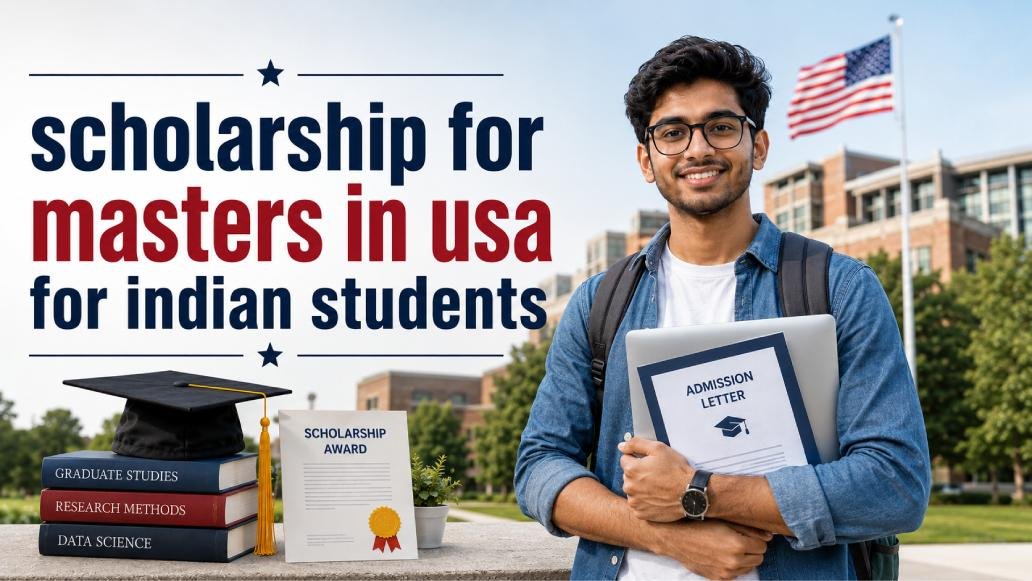
Indian students can get scholarships for master’s degrees in the USA through universities, international fellowship programs, Indian foundations, government schemes, and graduate assistantships.
Funding is available for different degree types, including MS, MA, MPH, MPA, MPP, engineering master’s programs, environmental programs, public health programs, and other eligible graduate degrees.
The amount and type of funding vary significantly.
Some fellowships can cover tuition and living expenses. Some scholarships cover only part of tuition. Research and teaching assistantships can provide a stipend and tuition remission. Programs such as J. N. Tata, K. C. Mahindra, and Narotam Sekhsaria provide repayable financial support rather than free grants.
Indian applicants should therefore compare scholarships based on eligibility, degree coverage, amount, deadline, repayment obligation, duration, and remaining cost, rather than choosing an opportunity only because its headline amount appears large.
Current-status note: Scholarship information below was reviewed for September 1, 2026. Application deadlines, award amounts, eligible fields, and selection rules can change every year. Always confirm the live application cycle on the official scholarship website before applying.
Scholarships for Masters in USA for Indian Students: Quick Comparison
The following comparison separates scholarships, fellowships, and repayable loan scholarships.
| Scholarship or Funding Program | Best For | Funding | Repayable? | Key Requirement | Current Status |
|---|---|---|---|---|---|
| Knight-Hennessy Scholars | Stanford graduate applicants | Tuition, fees, living/academic stipend, travel and other support | No | Admission to eligible Stanford graduate program | Open; closes October 6, 2026 |
| AAUW International Fellowship | Women pursuing eligible STEM master’s degrees | USD 20,000 | No | Woman, non-U.S. citizen/permanent resident, first master’s, STEM, 3.5/4.0 GPA | Open; closes September 17, 2026 |
| Fulbright-Nehru Master’s Fellowship | Experienced Indian professionals in selected fields | Tuition/fees, living costs, airfare, health coverage and J-1 support | No | Minimum 3 years relevant full-time paid work experience | Latest published Master’s cycle closed |
| National Overseas Scholarship | Eligible low-income students from specified communities | Tuition and other approved educational/living costs | No | Category, income, academic and other scheme rules | 2026–27 first round completed |
| Inlaks Scholarship | High-achieving students in eligible disciplines | Up to USD 120,000 | No | Admission required; academic, age and subject rules | 2026 closed |
| Shardashish Interschool Fellowship | Eligible Columbia master’s students with financial need | Up to USD 50,000 for one year | No | Admission to specified Columbia programs | 2026–27 closed |
| Rotary Peace Fellowship | Peace and development professionals | Tuition, fees, room, board, travel and field-study expenses | No | Relevant professional experience and peace/development focus | 2027–28 closed; next cycle opens February 2027 |
| K. C. Mahindra Scholarship | Indian postgraduate students needing additional financing | Up to approx. USD 10,545 for top fellows under current published structure | Yes, interest-free | Indian citizenship and first-class degree/equivalent | 2026 closed |
| J. N. Tata Endowment | Indian students pursuing postgraduate study abroad | Up to approx. USD 21,090 | Yes | Indian citizen, academic and other eligibility rules | 2026 closed |
| Narotam Sekhsaria Foundation | High-achieving Indian postgraduate students | Full or partial repayable financial assistance | Yes, interest-free | Strong academics, Indian residency, age/admission conditions | 2026 closed |
The two most time-sensitive opportunities on September 1, 2026 are Knight-Hennessy Scholars and the AAUW International Fellowship.
The official Knight-Hennessy admission page lists October 6, 2026 as the deadline for its 2027 cohort.
The official AAUW International Fellowship page lists September 17, 2026 as the deadline for the 2027–28 fellowship cycle.
Indian students should also use the EducationUSA financial aid search to identify current university-specific financial aid opportunities.
What Counts as a Master’s Scholarship in the USA?
A master’s scholarship is financial support that helps a graduate student pay for a postgraduate degree.
However, students encounter several different funding mechanisms when searching for scholarships.
Understanding these differences prevents inaccurate financial planning.
Scholarship
A scholarship is normally awarded according to academic merit, financial need, nationality, field of study, leadership, community background, or another defined criterion.
A conventional scholarship does not normally require repayment.
Fellowship
A fellowship provides financial support for academic or professional development.
A fellowship can include tuition, living expenses, travel, insurance, academic allowances, or several benefits together.
Knight-Hennessy, Fulbright-Nehru, AAUW International Fellowships, and Rotary Peace Fellowships belong broadly within this funding category.
Merit Scholarship
A merit scholarship rewards academic or professional achievement.
Universities may evaluate applicants using GPA, academic rigor, test scores, research, leadership, work experience, or the overall admission profile.
Some universities automatically consider admitted students.
Others require a separate application.
Need-Based Financial Aid
Need-based aid considers the student’s financial circumstances.
Financial need alone does not always guarantee funding.
Programs can combine financial-need requirements with academic merit and specific eligibility conditions.
Research Assistantship
A Research Assistantship, or RA, is a graduate position connected to faculty or departmental research.
An RA may provide:
- A monthly or semester stipend.
- Tuition remission.
- A full or partial tuition waiver.
- Research experience.
- Access to laboratories or funded projects.
Funding depends on the institution, department, professor, grant, and appointment.
Teaching Assistantship
A Teaching Assistantship, or TA, provides financial support in exchange for teaching-related responsibilities.
Duties may include:
- Teaching laboratory sections.
- Leading tutorials.
- Grading.
- Holding office hours.
- Supporting undergraduate classes.
- Assisting faculty.
A TA may include a stipend and tuition benefits.
Graduate Assistantship
A Graduate Assistantship can involve research, teaching, administration, technology, student services, or other university work.
Compensation differs by institution.
Tuition Waiver or Tuition Remission
A tuition waiver reduces the amount of tuition a student pays.
It is not necessarily a cash scholarship.
A student with a tuition waiver may still need to finance housing, food, insurance, university fees, books, transportation, and personal expenses.
Loan Scholarship
A loan scholarship is repayable financial support.
The term “scholarship” can therefore be misleading if students assume every award is free money.
J. N. Tata, K. C. Mahindra, and Narotam Sekhsaria are important examples of financing programs with repayment obligations.
The EducationUSA guide to graduate funding identifies fellowships, teaching assistantships, research assistantships, and administrative assistantships as major forms of U.S. university graduate support. EducationUSA also notes that assistantships may provide tuition waivers and/or stipends.
Which Master’s Degrees Can Indian Students Get Scholarships For?
Scholarships are not limited to Master of Science programs.
The broader U.S. graduate-funding ecosystem covers multiple master’s degree types.
Master of Science Programs
MS programs commonly exist in fields such as:
- Computer Science.
- Data Science.
- Artificial Intelligence.
- Engineering.
- Biotechnology.
- Mathematics.
- Statistics.
- Environmental Science.
- Physics.
- Information Systems.
Funding opportunities can include university scholarships, departmental awards, RAs, TAs, AAUW for qualifying women, Knight-Hennessy at Stanford, and other program-specific funding.
Students interested specifically in MS funding should also read the Opportunity guide on scholarships for MS in USA for Indian students.
Master of Arts Programs
MA programs can receive university aid and selected external scholarships.
Columbia University’s Shardashish Fellowship, for example, has covered selected MA programs including Biotechnology, Mathematics of Finance, Statistics, Economics, and Ecology, Evolution and Conservation Biology under its current published program list.
Master of Public Health Programs
Public Health is an eligible field under the latest published Fulbright-Nehru Master’s Fellowship rules.
Graduate schools of public health may also provide institutional scholarships, assistantships, or research funding.
Master of Public Administration Programs
Some funding programs cover public administration and policy-related degrees.
Columbia’s Shardashish Fellowship currently includes the MPA in Environmental Science and Policy among its specified eligible programs.
Master of Public Policy Programs
MPP applicants should investigate:
- University merit aid.
- Public-policy fellowships.
- Peace and development programs.
- Government-sponsored schemes.
- Research or graduate assistantships.
Eligibility depends on each funder’s program definitions.
Environmental and Sustainability Master’s Programs
Environmental Science/Studies and Sustainable Development/Sustainability appear among the latest Fulbright-Nehru eligible fields.
Rotary Peace Fellowship and some university programs may also support related development-focused study.
International Legal Studies
International Legal Studies appears on the latest published Fulbright-Nehru Master’s list.
The exact U.S. degree title may differ between institutions.
Applicants should therefore match the scholarship’s field definition rather than relying only on degree abbreviations such as MA, MS, or LLM.
Best Scholarships for Master’s in USA for Indian Students
The best scholarship depends on the applicant’s university, degree, field, work experience, finances, and career goals.
The following programs represent different funding paths.
Knight-Hennessy Scholars at Stanford University
Knight-Hennessy Scholars is a graduate fellowship for students admitted to eligible Stanford University graduate programs.
Indian citizens can apply.
Knight-Hennessy has no citizenship, field-of-study, or regional quota restrictions.
Applicants must satisfy both Knight-Hennessy requirements and Stanford graduate-program admission requirements.
For the 2027 cohort, applicants generally must have earned their first bachelor’s degree in January 2020 or later. Separate rules apply to eligible military applicants.
The Knight-Hennessy eligibility page confirms that applicants from all countries and fields may apply.
What Does Knight-Hennessy Cover?
Knight-Hennessy funding can include:
- Tuition and associated fees.
- A stipend for living and academic expenses.
- Annual travel support.
- A relocation stipend for newly enrolling scholars.
- Additional eligible academic support.
Funding duration depends on the Stanford graduate degree.
What Is the Deadline?
The application for the 2027 cohort closes on October 6, 2026 at 1:00 p.m. Pacific Time.
Applicants must also submit a separate Stanford graduate-program application by the applicable KHS program deadline.
The official Knight-Hennessy deadline page explains both deadlines.
Who Should Apply?
Apply if:
- You plan to attend Stanford.
- You meet the bachelor’s-degree timing rules.
- You have a strong academic profile.
- You can demonstrate purposeful leadership.
- You can demonstrate independence of thought.
- You can demonstrate civic mindset.
Knight-Hennessy explicitly evaluates these qualities.
Who Should Not Apply?
Do not apply if Stanford does not offer the program you want or you do not plan to submit a qualifying Stanford graduate application.
Knight-Hennessy cannot fund a master’s degree at another university.
AAUW International Fellowship
The AAUW International Fellowship is a particularly relevant funding opportunity for eligible Indian women pursuing master’s-level STEM education in the United States.
The 2027–28 fellowship cycle is currently open.
How Much Does AAUW Provide?
The current master’s fellowship stipend is USD 20,000.
Applicants should treat the fellowship as financial support rather than assuming it covers the complete cost of a U.S. degree.
Who Is Eligible?
Under current rules, master’s applicants must:
- Identify as women.
- Be non-U.S. citizens.
- Not hold U.S. permanent residency.
- Be pursuing their first master’s degree.
- Pursue an eligible STEM discipline.
- Have at least a 3.5/4.0 cumulative GPA for their highest earned degree.
- Study full-time.
- Meet the fellowship’s timing and program requirements.
Eligible areas include disciplines such as Computer Science, Engineering, Physics, Data Science, Mathematics, and other qualifying STEM fields.
Review the complete current rules through the official AAUW International Fellowships page.
What Is the Deadline?
Applications opened August 17, 2026.
Applications close September 17, 2026 at 5:00 p.m. Eastern Time.
Who Should Apply?
Indian women pursuing an eligible first STEM master’s degree should consider AAUW if they meet the academic and admission conditions.
Who Should Not Apply?
A student pursuing a non-STEM master’s degree should not assume that older descriptions of AAUW eligibility still apply.
The current 2027–28 rules must be used.
Fulbright-Nehru Master’s Fellowship
The Fulbright-Nehru Master’s Fellowship is designed for experienced Indian professionals pursuing selected master’s fields in the United States.
The United States-India Educational Foundation administers the program.
The latest official Master’s page currently available is for the 2026–27 fellowship cycle.
That application cycle has already closed.
Students considering a future application should monitor the official Fulbright-Nehru Master’s Fellowship page for the next Master’s announcement.
What Does Fulbright-Nehru Cover?
The fellowship provides support for up to two years.
Benefits include:
- Tuition and fees.
- Living and related costs.
- Round-trip economy airfare.
- J-1 visa support.
- Accident and sickness coverage under program rules.
USIEF explicitly states that the fellowship may not cover all costs, so recipients may need additional financial resources.
What Are the Academic Requirements?
Applicants must generally:
- Hold an equivalent of a U.S. bachelor’s degree.
- Have at least 55% marks under the published rules.
- Meet the degree-duration/equivalency conditions.
Is Work Experience Required?
Yes.
Applicants must have at least three years of relevant full-time paid professional experience by the application deadline.
Applicants should also demonstrate leadership and community service.
Which Fields Are Eligible?
The latest published Master’s cycle covered:
- Economics.
- Environmental Science/Studies.
- Higher Education Administration.
- International Legal Studies.
- Journalism and Mass Communication.
- Public Health.
- Sustainable Development/Sustainability.
- Urban and Regional Planning.
The official Fulbright-Nehru applicant annexure confirms these fields.
Is Fulbright-Nehru Available for Every Master’s Degree?
No.
A generic statement that “Fulbright funds master’s study in the USA” is incomplete.
The Indian Fulbright-Nehru Master’s Fellowship uses specific eligible fields.
For example, general Computer Science was not an eligible field in the latest published cycle.
Who Should Apply?
Apply if you:
- Are an Indian applicant meeting the formal requirements.
- Have at least three years of relevant professional experience.
- Work in an eligible field.
- Have demonstrated leadership.
- Can explain how the degree will support your future contribution in India.
Who Should Not Apply?
Fresh graduates without the required work experience should prioritize university funding and other external scholarships.
Applicants in fields outside the published list should not apply unless the next cycle changes the eligible disciplines.
National Overseas Scholarship
The National Overseas Scholarship is a Government of India scheme that supports eligible low-income students from specified marginalized communities pursuing higher education abroad.
The scheme supports master’s and PhD study.
The official National Overseas Scholarship portal identifies the eligible target groups and current application notices.
Who Is the Scholarship For?
The scheme serves eligible candidates from groups including:
- Scheduled Castes.
- Denotified Nomadic Tribes.
- Semi-Nomadic Tribes.
- Landless Agricultural Labourers.
- Traditional Artisans.
Additional income, age, academic, admission, and institution-related conditions apply under the current scheme guidelines.
What Does NOS Cover?
Approved benefits can include major educational expenses under the scheme, such as tuition and other permitted study-related costs.
Applicants should use the official NOS guidelines section for the current selection year’s precise financial and eligibility conditions.
What Is the Current Status?
The first application round for Selection Year 2026–27 ran from April 24 to June 2, 2026, followed by a correction window.
The first-round result for 2026–27 has been published.
Who Should Apply?
Students who satisfy the scheme’s community, income, academic, age, and admission requirements should prioritize NOS because its financial support can be substantially more valuable than small private awards.
Who Should Not Apply?
Applicants outside the defined eligible communities should pursue other funding options.
Inlaks Scholarship
The Inlaks Scholarship supports eligible Indian students pursuing postgraduate study at leading institutions in the United States, United Kingdom, and Europe.
The scholarship can provide substantial financial support.
However, its field restrictions make eligibility checking essential.
How Much Does Inlaks Provide?
The current published maximum is USD 120,000.
Funding can cover:
- Tuition fees.
- Living expenses.
- One-way travel.
- Visa costs.
- Health allowance.
The course can generally last between nine months and four years.
Who Is Eligible?
Current rules include conditions such as:
- Indian passport.
- Residence in India.
- Age limit.
- Recognized degree.
- Minimum academic grades.
- Admission to the proposed institution and course.
The 2026 requirements include minimum academic thresholds of 65% for specified humanities/social-science-related fields and 70% for mathematics/science/environment-related fields.
Which Subjects Are Excluded?
This is one of the most important details for Indian master’s applicants.
The current published exclusions include:
- Business and Finance.
- Computer Science.
- Most Engineering.
- Fashion Design.
- Film and Film Animation, with a stated documentary exception.
- Hospitality and Tourism.
- Management Studies, including MBA.
- Medicine and Dentistry.
- Certain additional fields.
The official Inlaks Scholarship page lists the current exclusions.
Can an Indian Student Use Inlaks for MS Computer Science in USA?
Not under the 2026 rules.
Computer Science is explicitly excluded.
Most Engineering study is also excluded, except for a specified Imperial College London exception that does not create a general U.S. engineering eligibility route.
How Are Inlaks Scholars Selected?
The current process has three major stages:
- Review of eligible applications.
- Online preliminary interviews.
- Final in-person interview in Mumbai.
Applicants are assessed on past achievements, current accomplishments, and future potential.
Current Status
Applications for 2026 are closed.
Future applicants should monitor the official Inlaks website for the next cycle.
Shardashish Interschool Fellowship at Columbia University
The Shardashish Interschool Fellowship is a Columbia University funding opportunity with a particularly strong connection to Indian students.
The fellowship is supported by the UNM Foundation.
Its purpose includes expanding access to Columbia for financially challenged students with a demonstrated commitment to India.
How Much Can the Fellowship Provide?
The fellowship can provide up to USD 50,000 for one year.
The award can be applied toward tuition and fees.
The exact amount depends on the program, demonstrated financial need, and application qualifications.
Which Programs Are Eligible?
The latest published list includes selected programs such as:
- MA in Biotechnology.
- MA in Mathematics of Finance.
- MA in Statistics.
- MA in Economics.
- MA in Ecology, Evolution and Conservation Biology.
- MS programs in Columbia Engineering.
- MPA in Environmental Science and Policy.
Applicants must apply and be admitted to a specified program.
What Are the Main Selection Criteria?
Current criteria include:
- Established commitment to India and its future.
- Demonstrated financial need.
- Preference for residents of India.
- Admission to a specified Columbia program.
Review the current details through the official Columbia Shardashish Fellowship page.
Current Status
The 2026–27 application cycle has closed.
Columbia states that future information should be checked when the next application cycle is published.
Rotary Peace Fellowship
The Rotary Peace Fellowship is a fully funded graduate fellowship for professionals focused on peace and development.
It is not a general scholarship for every master’s field.
The fellowship is particularly relevant to applicants whose education and career goals relate to peacebuilding, development, public policy, conflict resolution, humanitarian work, or related areas.
What Does Rotary Cover?
The fellowship covers:
- Tuition and fees.
- Room and board.
- Round-trip transportation.
- Internship expenses.
- Field-study expenses.
Rotary awards up to 50 master’s-degree fellowships per year.
How Long Does the Program Last?
Master’s programs generally last 15 to 24 months and include an applied field-study component.
Who Should Apply?
Applicants should have meaningful work experience in peace and development and a commitment to community or international service.
What Is the Current Status?
The 2027–28 application cycle is closed.
Rotary states that applications for the 2028–29 Rotary Peace Fellowship will become available in February 2027.
Students can monitor the official Rotary Peace Fellowship page.
Loan Scholarships for Indian Students Pursuing a Master’s in USA
Loan scholarships should be evaluated separately from non-repayable scholarships.
They reduce the immediate funding gap but create a future repayment obligation.
K. C. Mahindra Scholarship for Postgraduate Studies Abroad
The K. C. Mahindra Scholarship supports Indian students pursuing postgraduate study at leading universities abroad.
It is an interest-free loan scholarship.
How Much Funding Is Available?
The currently published structure provides:
- Up to INR 10 lakh for the top three K. C. Mahindra Fellows.
- Up to INR 5 lakh for other awardees.
Using the September 1, 2026 comparison conversion applied during this research, those amounts are approximately:
- USD 10,545.
- USD 5,272.
These USD figures are approximate conversions. KCMET officially denominates the awards in INR.
Who Is Eligible?
Current criteria include:
- Indian citizenship.
- First-class degree or equivalent diploma from a recognized university.
- Enrollment in a qualifying postgraduate program.
Final-year students can also apply subject to providing the required completion and academic documentation.
The official K. C. Mahindra scholarship page provides the current conditions.
What Is the Current Status?
Applications for academic year 2026 are closed.
The deadline was April 30, 2026.
Who Should Apply?
The program can be useful for students with most of their funding arranged but a remaining financing gap.
Who Should Not Apply?
Students seeking exclusively non-repayable aid should not treat K. C. Mahindra as a free scholarship.
J. N. Tata Endowment Loan Scholarship
The J. N. Tata Endowment provides loan scholarships to Indian students pursuing postgraduate, PhD, and postdoctoral study overseas.
How Much Can Students Receive?
The maximum current loan scholarship is INR 20 lakh.
Using the September 1, 2026 comparison conversion, this equals approximately USD 21,090.
The USD amount is an approximate conversion. The official award is denominated in INR.
Not every selected applicant receives the maximum amount.
Who Is Eligible?
For the 2026 cycle, conditions included:
- Indian citizenship.
- Age not above 45 as of June 30, 2026.
- Degree from a recognized Indian university.
- At least 60% average academic performance.
- Full-time postgraduate, doctoral, or postdoctoral study overseas.
Students already overseas may qualify in certain circumstances if enough academic study remains.
Is J. N. Tata Free Money?
No.
It is a loan scholarship.
Applicants must also arrange a guarantor.
The official J. N. Tata Endowment FAQ explains the current loan and guarantor conditions.
How Are Applicants Selected?
The process can include:
- Initial application.
- Aptitude test.
- Subject-expert interview.
- Final selection.
Applicants should prepare for both academic and profile-based evaluation.
Current Status
The 2026 application cycle is closed.
Applicants should verify the next cycle directly rather than reusing an old deadline.
Narotam Sekhsaria Foundation Postgraduate Scholarship
The Narotam Sekhsaria Foundation supports high-achieving Indian students pursuing postgraduate study in India and abroad.
The Foundation describes the award as repayable interest-free financial assistance.
Who Is Eligible?
For the 2026 cycle, applicants had to:
- Be Indian nationals residing in India.
- Be below 30 years of age as of January 31, 2026.
- Have graduated from an accredited Indian university or be completing the final year.
- Plan to begin qualifying postgraduate study in Fall 2026.
- Obtain admission before the award becomes final.
Students awaiting university acceptance could still apply.
How Does the Application Work?
The current process includes:
- Online registration.
- Application submission.
- Shortlisting.
- Supporting-document upload.
- Interview.
- Final selection.
- Mandatory orientation for selected scholars.
Is the Scholarship Repayable?
Yes.
Repayment begins one year after course completion and is made through installments.
The assistance is interest-free.
Current Status
Applications for 2026 are closed.
The 2026 deadline was March 23, 2026.
Future applicants should use the official Narotam Sekhsaria application page for updated dates and rules.
Fully Funded vs Partial vs Loan Scholarships
Students should classify funding before comparing awards.
| Funding Type | Tuition | Living Costs | Repayment | Work Requirement |
|---|---|---|---|---|
| Fully funded fellowship | Usually substantial/full | Usually included | No | Usually no employment obligation |
| Full-tuition scholarship | Full tuition | Usually not fully covered | No | Usually no |
| Partial scholarship | Part of tuition/cost | Usually limited | No | Usually no |
| Research Assistantship | May include waiver/remission | Stipend often provided | No | Research work |
| Teaching Assistantship | May include waiver/remission | Stipend often provided | No | Teaching work |
| Loan scholarship | Depends on award | May help finance multiple costs | Yes | No university employment required |
Full Tuition Does Not Mean Fully Funded
A scholarship covering 100% of tuition can still leave substantial costs.
Students may still need money for:
- Housing.
- Food.
- Health insurance.
- University fees.
- Books.
- Transportation.
- Personal expenses.
- Travel.
Calculate the Real Funding Gap
Use this formula:
Total Cost of Attendance − Non-Repayable Scholarships − Tuition Waivers − Confirmed Assistantship Support = Remaining Funding Gap
Suppose a university estimates total annual tuition and living costs at USD 65,000.
A USD 20,000 fellowship leaves approximately USD 45,000 to finance unless the student receives additional support.
The headline award is therefore less important than the final net cost.
Which Scholarship Is Best for Your Profile?
Students should prioritize scholarships where their profile structurally matches the eligibility and selection criteria.
| Applicant Profile | Funding Routes to Prioritize |
|---|---|
| Fresh graduate with no work experience | University scholarships, RA, TA, GA, Knight-Hennessy if Stanford-bound |
| Applicant with 3+ years relevant experience | Fulbright-Nehru where field is eligible, university aid |
| Indian woman pursuing STEM | AAUW, university scholarships, assistantships |
| Student from an NOS-eligible community | National Overseas Scholarship |
| Stanford master’s applicant | Knight-Hennessy |
| Columbia applicant with financial need | Shardashish where program is eligible |
| Peace/development professional | Rotary Peace Fellowship |
| Public Health applicant | Fulbright-Nehru where eligible, university aid |
| MA applicant | Inlaks where field is permitted, Shardashish where applicable, university aid |
| Computer Science applicant | University merit aid, RA/TA/GA, AAUW where eligible |
| Engineering applicant | University aid, assistantships, AAUW where eligible, loan scholarships |
| Applicant needing supplementary financing | J. N. Tata, K. C. Mahindra, Narotam Sekhsaria |
| Applicant needing complete funding | Prioritize comprehensive fellowships and substantial assistantships |
Who Should Apply and Who Should Not Apply?
A scholarship should match both the student’s formal eligibility and financial objective.
Who Should Apply?
You should apply when:
- Your nationality matches the requirement.
- Your master’s degree is eligible.
- Your field is eligible.
- Your GPA or percentage meets the minimum.
- You satisfy age limits.
- You satisfy work-experience requirements.
- Your financial circumstances meet need-based conditions.
- You have or can obtain the required admission status.
- You can provide all required documents.
- You have sufficient time to prepare a competitive application.
- The funding meaningfully reduces your cost.
Who Should Not Apply?
Do not apply when:
- Your subject is explicitly excluded.
- The scholarship is undergraduate-only.
- The deadline has passed.
- Mandatory work experience is missing.
- You fail a strict GPA threshold.
- You exceed an age limit.
- You need an admission offer but do not have one.
- Your nationality or residency is ineligible.
- You need non-repayable funding but the program is a loan.
- The scholarship covers too little of a funding gap that you cannot otherwise finance.
Eligibility Is Not the Same as Competitiveness
Eligibility means the scholarship organization can consider your application.
Competitiveness determines how your application compares with other eligible candidates.
A student can satisfy every minimum requirement and still lose because other candidates demonstrate stronger:
- Academic achievement.
- Research.
- Leadership.
- Professional impact.
- Community service.
- Program fit.
- Career purpose.
- Recommendations.
The correct question is therefore not only: “Am I eligible?”
It is also: “What evidence makes me competitive for this specific scholarship?”
Eligibility Requirements for Master’s Scholarships in USA
There is no universal scholarship requirement.
Each funder establishes its own conditions.
Indian Citizenship or Residency
Some scholarships specifically require Indian citizenship or residence.
Examples include Inlaks, K. C. Mahindra, J. N. Tata, and Narotam Sekhsaria.
International programs such as Knight-Hennessy accept applicants from many countries.
Bachelor’s Degree
Master’s applicants generally need a bachelor’s degree or an accepted equivalent.
Scholarships can impose additional degree-duration or institution requirements.
GPA, CGPA or Percentage
There is no single GPA required for every U.S. scholarship.
Examples demonstrate the variation.
AAUW currently requires a minimum 3.5/4.0 GPA for the highest earned degree.
Fulbright-Nehru’s latest Master’s requirements specify at least 55% plus qualifying degree conditions.
J. N. Tata uses a 60% average threshold under the current published rules.
Inlaks applies different academic thresholds by discipline.
Work Experience
Work experience is scholarship-specific.
Fulbright-Nehru requires at least three years of relevant full-time paid professional experience.
Knight-Hennessy does not use that same requirement.
University merit scholarships may accept fresh graduates.
GRE and GMAT
GRE or GMAT scores are not universally required for scholarships.
The university may require a test even when the scholarship does not.
Students should check three separate layers:
- University graduate-admission requirement.
- Academic department requirement.
- Scholarship requirement.
TOEFL, IELTS and English-Language Tests
International students may need to demonstrate English-language proficiency.
The exact requirement depends on the university and scholarship.
A scholarship does not automatically waive the university’s language requirement.
Research Experience
Research experience can strengthen applications for:
- STEM master’s programs.
- Research assistantships.
- Thesis-based programs.
- Academic fellowships.
Useful evidence includes:
- Research internship.
- Undergraduate thesis.
- Journal article.
- Conference paper.
- Laboratory project.
- Technical report.
- Research software.
- Faculty-led project.
Leadership and Community Service
Leadership matters particularly for programs such as Knight-Hennessy and Fulbright-Nehru.
Leadership should be demonstrated through outcomes.
A student should explain:
- What problem existed.
- What responsibility the student accepted.
- What action the student took.
- What measurable outcome resulted.
Financial Need
Need-based programs can require:
- Family income evidence.
- Tax returns.
- Sponsor information.
- Financial statements.
- University cost information.
Financial need should be documented accurately.
Admission Offer
Admission timing differs by scholarship.
Inlaks requires prior admission evidence.
Shardashish requires admission to specified Columbia programs.
Narotam Sekhsaria allows students awaiting acceptance to apply, but the final award depends on securing admission.
University Scholarships and Assistantships for Master’s Students
External scholarships are only one part of graduate financing.
For many Indian students, university funding may be more realistic than winning a major national fellowship.
The EducationUSA graduate finance guide advises students to investigate teaching and research assistantships that may provide a tuition waiver and/or stipend.
University Merit Scholarships
Some graduate programs automatically consider applicants for merit awards.
Other programs require a separate scholarship application.
Check:
- Graduate school funding page.
- Department funding page.
- International-student aid page.
- Program FAQ.
- Admission offer conditions.
Research Assistantships
Research Assistantships can be particularly important in:
- Computer Science.
- Engineering.
- Artificial Intelligence.
- Data Science.
- Biotechnology.
- Environmental Science.
- Physics.
- Chemistry.
- Statistics.
- Other research-intensive fields.
Applicants should identify faculty whose work matches their actual research background.
Generic emails to dozens of professors are less useful than targeted outreach.
Teaching Assistantships
TA positions may require:
- Subject knowledge.
- Communication skills.
- English-language proficiency.
- Previous teaching or tutoring experience.
Duties can include grading, laboratory supervision, tutorials, discussion sections, or teaching support.
Graduate Assistantships
Graduate Assistantships may exist outside academic departments.
Possible locations include:
- Libraries.
- Student affairs.
- Research centers.
- Technology units.
- Administrative departments.
- Laboratories.
- Campus offices.
Tuition Waivers
A tuition waiver can sometimes have greater financial value than a small external scholarship.
A USD 5,000 scholarship sounds attractive.
However, a substantial tuition remission plus a recurring assistantship stipend could reduce net cost by much more.
Can Master’s Students Get Fully Funded Assistantships?
Sometimes.
Assistantships are generally more common at the PhD level, but master’s funding exists at many universities and departments.
EducationUSA notes that assistantship funding is very common at the PhD level, which means master’s applicants should verify availability rather than assume it is guaranteed.
When Should You Apply for Master’s Scholarships?
Funding research should start before the university application process is complete.
EducationUSA recommends beginning graduate research approximately 12 to 18 months before enrollment.
EducationUSA also notes that scholarship deadlines can occur as early as 18 months before a program starts.
12–18 Months Before Enrollment
- Research universities.
- Determine likely tuition.
- Estimate living expenses.
- Identify scholarships.
- Identify external fellowships.
- Investigate assistantships.
- Check testing requirements.
9–12 Months Before Enrollment
- Take relevant standardized tests.
- Prepare your CV.
- Identify recommenders.
- Build a university shortlist.
- Research professors.
- Begin scholarship essays.
6–9 Months Before Enrollment
- Submit university applications.
- Submit major fellowship applications.
- Track university merit-aid deadlines.
- Follow up on recommendations.
After Admission
- Apply for admission-dependent scholarships.
- Apply for departmental awards.
- Ask about RA/TA/GA positions.
- Compare funding packages.
Before Visa Processing
- Confirm funding documentation.
- Calculate the remaining financial requirement.
- Obtain official scholarship letters.
- Confirm how university funding will appear in financial documentation.
Step-by-Step Application Guide
A structured process helps students avoid irrelevant applications and missed deadlines.
Step 1: Calculate Your Funding Gap
Find each university’s estimated cost of attendance.
Include:
- Tuition.
- Mandatory fees.
- Health insurance.
- Housing.
- Food.
- Books.
- Transportation.
- Personal expenses.
Subtract the amount you or your family can safely contribute.
The difference is your initial funding gap.
Step 2: Build Your Eligibility Profile
Create a one-page profile containing:
- Nationality.
- Residence.
- Bachelor’s degree.
- GPA/CGPA/percentage.
- Graduation year.
- Intended master’s degree.
- Field.
- Work experience.
- Research experience.
- GRE/GMAT.
- TOEFL/IELTS/DET.
- Leadership.
- Community service.
- Financial need.
- University admission status.
Step 3: Separate Funding by Type
Create categories for:
- Non-repayable scholarships.
- Fellowships.
- University merit awards.
- Need-based aid.
- Tuition waivers.
- Research Assistantships.
- Teaching Assistantships.
- Graduate Assistantships.
- Loan scholarships.
- Education loans.
This prevents misleading comparisons.
Step 4: Remove Opportunities You Cannot Qualify For
Eliminate an opportunity immediately when a mandatory requirement fails.
For example:
- Computer Science applicant → do not rely on current Inlaks rules.
- Fresh graduate → do not target Fulbright-Nehru Master’s without required work experience.
- Non-Stanford applicant → Knight-Hennessy is irrelevant.
- Non-eligible community → NOS is irrelevant.
- Master’s applicant → undergraduate-only awards are irrelevant.
Step 5: Verify the Current Cycle
Use the official website.
Verify:
- Application year.
- Opening date.
- Deadline.
- Eligible nationality.
- Degree level.
- Subject.
- GPA.
- Age.
- Work experience.
- Admission status.
- Funding.
- Duration.
- Repayment.
Step 6: Create a Deadline Tracker
Use a table such as:
| Scholarship | Opens | Deadline | Admission Needed? | Documents Ready? | Submitted? |
|---|
Add reminders several weeks before every deadline.
Step 7: Prepare Core Documents
Create a master folder for:
- Transcripts.
- Degree certificates.
- Passport.
- CV.
- Test scores.
- Research evidence.
- Employment records.
- Awards.
- Financial documents.
Step 8: Customize Every Scholarship Essay
Do not use the same essay unchanged.
The application should connect: Past evidence → proposed master’s degree → scholarship purpose → future impact
Step 9: Request Strong Recommendation Letters
Choose recommenders who know your work.
A specific letter is stronger than a prestigious person’s generic letter.
Good recommendations explain:
- What the applicant did.
- How the applicant performed.
- How the applicant compares with peers.
- What qualities the recommender directly observed.
Step 10: Submit Before the Deadline
Do not target the final hour.
Potential problems include:
- Portal downtime.
- File-size errors.
- Time-zone mistakes.
- Recommender delays.
- Incorrect document formats.
- Payment issues.
Step 11: Prepare for Interviews
Review:
- Your essays.
- Proposed degree.
- University choices.
- Work history.
- Academic projects.
- Financial plan.
- Career objectives.
- Scholarship mission.
Your oral answers should remain consistent with your written application.
Step 12: Compare Funding Offers
Compare:
- Amount.
- Duration.
- Tuition remaining.
- Stipend.
- Renewal.
- Employment responsibilities.
- Repayment.
- Other-aid restrictions.
- Remaining cost.
Do not choose only by headline award amount.
Required Documents Explained
Requirements vary between programs, but several documents appear repeatedly.
| Document | What It Demonstrates | Common Mistake |
|---|---|---|
| Academic transcripts | Academic history | Missing semesters or unofficial format where official copy is required |
| Degree certificate | Completion of prior degree | Not providing provisional certificate when applicable |
| CV or resume | Academic/professional profile | Listing duties without outcomes |
| Statement of Purpose | Academic purpose and fit | Generic essay |
| Scholarship essays | Alignment with funder’s criteria | Reusing identical answers |
| Letters of Recommendation | Independent evidence | Choosing someone who barely knows the applicant |
| Admission letter | University acceptance | Providing wrong or outdated offer |
| GRE/GMAT | Standardized evidence where relevant | Assuming high scores guarantee funding |
| TOEFL/IELTS/DET | English proficiency | Missing scholarship/university threshold |
| Passport | Identity/nationality | Expired passport |
| Income documents | Need-based eligibility | Wrong financial year or missing proof |
| Employment certificate | Professional experience | Missing dates or employment status |
| Research evidence | Research capability | Listing a project without explaining contribution |
| Award certificates | Achievement evidence | Unverifiable claims |
Academic Transcripts
Transcripts demonstrate academic performance over time.
Ensure:
- All semesters are included.
- Course names are legible.
- Grading scale is understandable.
- Applicant name matches other documents.
CV or Resume
The scholarship CV should emphasize evidence relevant to the award.
Include:
- Education.
- Research.
- Work experience.
- Projects.
- Publications.
- Leadership.
- Volunteering.
- Awards.
- Technical skills where relevant.
Statement of Purpose
The SOP explains the applicant’s academic direction.
A strong structure is:
- Current academic/professional context.
- Problem or field of interest.
- Relevant preparation.
- Reason for the master’s program.
- Career objective.
- Expected impact.
Scholarship Essays
Scholarship essays answer funder-specific questions.
A leadership fellowship requires different evidence from a need-based scholarship.
Letters of Recommendation
A useful recommendation provides independent evidence of competence.
The best recommender is usually someone who directly supervised academic, research, or professional work.
Admission Letter
Some scholarships require admission before application.
Others allow applicants to submit while university decisions are pending.
Check the scholarship rule carefully.
Financial Documents
Need-based scholarships may request:
- Income Tax Returns.
- Salary information.
- Family-income proof.
- Sponsor details.
- University fee information.
- Existing scholarship information.
Work-Experience Documents
Professional fellowships may require:
- Employer certificate.
- Appointment letter.
- Experience certificate.
- Employer endorsement.
- Leave approval.
Research Evidence
Research-oriented applicants can provide:
- Publications.
- Thesis abstract.
- Research poster.
- Project report.
- Portfolio.
- GitHub or technical work where appropriate.
The Narotam Sekhsaria application process provides a useful real-world example of required documents for shortlisted candidates, including academic marksheets, qualifying-test scores, admission and fee information, reference letters, other funding evidence, tax documents, and passport documentation.
How Are Scholarship Winners Selected?
Selection usually occurs in stages.
Stage 1: Eligibility Screening
The organization checks mandatory criteria.
These may include:
- Nationality.
- Degree.
- GPA.
- Age.
- Field.
- Work experience.
- Income.
- Admission.
Failure at this stage can make the rest of the application irrelevant.
Stage 2: Academic Evaluation
Reviewers assess:
- Grades.
- Academic rigor.
- Research.
- Publications.
- Awards.
- Projects.
- Professional achievements.
Stage 3: Essays and Recommendations
Reviewers evaluate:
- Purpose.
- Fit.
- Leadership.
- Future goals.
- Evidence.
- Recommender credibility.
Stage 4: Shortlisting
The strongest eligible applicants progress.
Being shortlisted is not the same as winning.
Stage 5: Aptitude Test Where Required
J. N. Tata uses an aptitude-test stage under its current selection process.
Stage 6: Interview
Interview questions may test:
- Academic understanding.
- Motivation.
- Career direction.
- Scholarship fit.
- Financial plan.
- Leadership.
- Communication.
- Authenticity.
Stage 7: Final Selection
The scholarship committee compares finalists and available funding.
Real Selection Example: Inlaks
The official Inlaks process includes:
- Application review.
- Online preliminary interview.
- Final in-person interview in Mumbai.
Real Selection Example: Fulbright-Nehru
The published Fulbright-Nehru process includes application review, shortlisting, national interviews, nomination, approval, and university placement.
Fulbright placement is unusual because recommended Master’s candidates do not simply manage every U.S. university application independently. The Institute of International Education participates in the placement process under the program’s published procedure.
How to Improve Your Chances of Winning a Scholarship
No strategy guarantees funding.
However, several practices improve application quality.
Meet the Exact Eligibility First
Do not spend hours writing an essay before checking mandatory criteria.
Verify eligibility first.
Demonstrate Evidence Instead of Claims
Weak: I am an excellent leader.
Stronger: I led a six-person student team that developed a water-quality monitoring prototype and coordinated testing across three locations.
Evidence is easier to evaluate.
Connect Past Experience to Future Study
A strong application has continuity.
Use: Past preparation → current capability → proposed master’s → future contribution
Quantify Achievements
Where appropriate, include:
- Rank.
- GPA.
- Publication count.
- Research output.
- Team size.
- Revenue impact.
- Users served.
- Process improvement.
- Competition result.
Demonstrate Scholarship-Specific Fit
Knight-Hennessy emphasizes independence of thought, purposeful leadership, and civic mindset.
Fulbright-Nehru emphasizes leadership, professional experience, and future contribution.
The application should respond to the specific scholarship rather than an imaginary universal selection formula.
Choose Strong Recommenders
A detailed academic recommendation from a professor who supervised your research can be more useful than a generic letter from a senior administrator.
Apply Across Several Funding Layers
Build a portfolio: External fellowship + university scholarship + departmental funding + assistantship search
Do not depend on one result.
Common Scholarship Application Mistakes
Several mistakes repeatedly reduce scholarship eligibility or competitiveness.
Applying to an Expired Scholarship
Google can rank an old scholarship page after the application cycle ends.
Always check the year.
Using an Old Deadline
Scholarship deadlines change.
Do not copy a previous year’s date into your plan.
Ignoring Degree-Level Restrictions
A scholarship for international students is not automatically a scholarship for master’s students.
Ignoring Field Restrictions
Inlaks demonstrates this problem clearly.
Its current rules exclude Computer Science and most Engineering, among other fields.
Confusing Loan Scholarships With Grants
J. N. Tata, K. C. Mahindra, and Narotam Sekhsaria create repayment obligations.
They should not be described as free funding.
Calling Full Tuition “Fully Funded”
Full tuition can still leave substantial living costs.
Use precise terminology.
Using a Generic SOP
A scholarship essay should explain why the applicant fits the specific funder.
Reusing the Same Essay Everywhere
Reuse evidence, not unchanged arguments.
Selecting Weak Recommenders
Recommendation quality depends on specificity.
Focusing Only on GRE
The GRE can matter for admission or some funding decisions.
It does not replace:
- GPA.
- Research.
- Essays.
- Leadership.
- Work experience.
- Recommendations.
- Scholarship fit.
Ignoring Assistantships
A university assistantship can sometimes create greater financial value than a small external award.
Assuming Funding Will Appear After Arrival
Some students hope that an assistantship will become available after the first semester.
That may happen.
It is not guaranteed.
Make the admission decision using confirmed funding, not hoped-for funding.
Failing to Calculate Remaining Cost
A scholarship amount means little without the total cost.
Always calculate net cost.
Scholarships Often Incorrectly Recommended to Master’s Students
Scholarship lists frequently optimize for the number of programs rather than eligibility accuracy.
That creates misleading recommendations.
Cornell Tata Scholarship Is an Undergraduate Award
The Tata Scholarship at Cornell University is frequently included in broad lists for Indian students.
However, Cornell describes the Tata Scholarship as financial aid for undergraduate students from India.
It should therefore not be treated as a general master’s scholarship.
Indian graduate applicants should use Cornell’s relevant graduate-school or department funding information instead.
Inlaks Does Not Cover Every Master’s Field
Inlaks provides substantial funding.
That does not mean every master’s applicant qualifies.
Its current exclusions include Computer Science, most Engineering, Business and Finance, MBA/Management, and other specified fields.
Hubert H. Humphrey Is Not a Master’s Degree Scholarship
Another important classification issue involves the Hubert H. Humphrey Fellowship.
Participants complete master’s-level academic work, but the program does not result in a degree.
It should therefore not be listed as a scholarship for earning a U.S. master’s degree.
The official USIEF Humphrey Fellowship page explicitly describes it as non-degree study.
This distinction matters because “master’s-level study” and “master’s degree” are not semantically equivalent.
Previous Years’ Trends Indian Applicants Should Know
Historical data helps students understand how the U.S. graduate market is changing.
India Remains the Largest Source of International Students in the USA
The Institute of International Education reported 363,019 students from India in the United States during 2024–25.
That represented a 10% increase from the previous year.
India remained the largest source country for international students in the United States.
International Graduate Enrollment Has Weakened
Open Doors 2025 reported 488,481 international graduate students.
Graduate enrollment declined approximately 3% after several years of growth.
New international graduate enrollment fell approximately 15%.
These figures do not prove that scholarships became easier or harder to obtain.
They show that the U.S. graduate market is changing, which makes current-cycle research more important than relying on assumptions from older admission seasons.
High Indian Enrollment Does Not Mean Funding Is Automatic
The large Indian student population demonstrates sustained interest in U.S. higher education.
It does not mean that universities fully fund most master’s students.
EducationUSA explicitly notes that most scholarship awards may cover only part of total educational and living expenses and that assistantship funding is especially common at the PhD level.
Students should therefore separate:
high enrollment demand ≠ guaranteed scholarship availability
Opportunity Research Notes: What Most Scholarship Lists Miss
The following findings create useful information gain for students comparing funding opportunities.
Research Note 1: “Master’s Scholarship” Is Broader Than “MS Scholarship”
A master’s degree can be:
- MS.
- MA.
- MPH.
- MPA.
- MPP.
- Other academic or professional graduate degrees.
A broad master’s scholarship guide should therefore not become a duplicate Computer Science and Engineering funding list.
Research Note 2: Degree Abbreviation Is Less Important Than Field Eligibility
Fulbright-Nehru does not simply fund “all master’s programs.”
It funds specific fields.
Inlaks also applies field restrictions.
Students should evaluate: degree level + subject + university + applicant profile
Research Note 3: Current Application Status Is a Separate Attribute
A scholarship can be:
- Legitimate.
- Relevant.
- Generous.
and still be closed today.
Opportunity pages should therefore display: Open / Closed / Upcoming / Next Cycle Not Announced
Research Note 4: Shardashish Is an Important India-Specific University Opportunity
Broad scholarship lists often focus only on nationwide foundation awards.
Columbia’s Shardashish Fellowship demonstrates that university-specific Indian funding can be substantial, with current published funding reaching up to USD 50,000 for one year.
Research Note 5: Loan Scholarships Need Their Own Category
A non-repayable USD 20,000 fellowship and a repayable USD 20,000-equivalent loan scholarship do not create the same financial outcome.
Repayment is a core entity attribute.
Research Note 6: External Scholarships Are Only One Funding Layer
EducationUSA identifies multiple sources of graduate funding, including U.S. universities and assistantships.
Indian students should therefore search at four levels:
- International fellowships.
- Indian government/foundation funding.
- University scholarships.
- Departmental assistantships.
Research Note 7: Famous Scholarship Names Can Produce Wrong Intent Matching
Cornell Tata targets undergraduates.
Humphrey is non-degree.
Inlaks excludes several popular master’s fields.
An article that lists all three without qualification creates entity-level inaccuracies.
Research Note 8: The Headline Amount Is Not the Real Value
The real financial value equals: Award received − repayment obligation + tuition avoided + stipend received
The remaining cost is more useful than the scholarship’s marketing number.
Scholarship vs Assistantship vs Loan: Which Is Better?
The best option depends on the student’s objectives.
| Attribute | Scholarship/Fellowship | RA | TA | Loan Scholarship |
|---|---|---|---|---|
| Repayment | Usually no | No | No | Yes |
| Tuition benefit | Varies | Often possible | Often possible | Indirect financing |
| Stipend | Sometimes | Often | Often | Usually loan amount |
| Work required | Usually no employment | Research | Teaching | No university employment |
| Academic experience | Varies | Strong research benefit | Teaching benefit | No direct academic role |
| Availability | External/university | Department-specific | Department-specific | External |
| Renewal | Program-specific | Appointment-specific | Appointment-specific | Not applicable in same sense |
Choose a Scholarship When
A scholarship provides meaningful non-repayable support and fits your profile.
Choose an RA When
Research experience directly supports your degree and career.
Choose a TA When
You have strong communication and subject skills and the financial package is competitive.
Use a Loan Scholarship When
A manageable funding gap remains after non-repayable support is exhausted.
What If You Do Not Get a Scholarship?
Rejection should trigger a new funding calculation rather than an automatic decision to abandon U.S. study.
Check Departmental Funding
Ask the program:
- Are merit scholarships available?
- Are admitted students automatically considered?
- Are assistantships offered to master’s students?
- When are positions assigned?
- Can funding begin after the first semester?
Search for Research Assistantships
Identify faculty with active research matching your experience.
A targeted email should explain:
- Your current degree.
- Research interests.
- Relevant skills.
- Relevant projects.
- Why the professor’s research aligns.
Search for Teaching Assistantships
Ask whether the department hires master’s students as teaching assistants.
Check English-language requirements.
Compare Lower-Cost Universities
EducationUSA advises students to evaluate different locations because living costs vary significantly across the United States.
It notes that many areas in the South, Midwest, and rural regions generally have lower living costs than expensive metropolitan areas.
Combine Partial Funding
Subject to award rules, a student may use:
- University scholarship.
- External scholarship.
- Family contribution.
- Assistantship.
- Loan.
Check whether one award reduces another before accepting multiple sources.
Borrow Only the Remaining Amount
Do not calculate a loan from headline tuition.
Calculate: Total cost − confirmed non-repayable funding − confirmed university support = financing requirement
Scholarships, I-20 and U.S. Student Visa Funding
Scholarship funding can affect how much personal funding an international student needs to demonstrate.
However, scholarship eligibility and immigration financial documentation are separate processes.
For an F-1 student, the university determines the financial documentation needed before issuing Form I-20.
A university may consider documented sources such as:
- Institutional scholarships.
- Assistantships.
- External scholarship letters.
- Personal funds.
- Sponsor funds.
- Approved financing.
Students should confirm exact requirements with the university’s international-student office.
Fulbright-Nehru operates differently because the fellowship provides J-1 visa support rather than functioning as a conventional F-1 university scholarship.
Scholarship blogs should not replace official university or U.S. government immigration guidance.
FAQs About Scholarships for Master’s in USA for Indian Students
Can Indian students get scholarships for a master’s in USA?
Yes. Indian students can receive university merit scholarships, international fellowships, Government of India support, private-foundation awards, tuition waivers, research assistantships, and teaching assistantships. Eligibility varies by degree, field, GPA, work experience, income, admission status, and nationality requirements, so applicants should build a funding strategy rather than depend on one scholarship.
Can I get a 100% scholarship for a master’s in USA?
Yes, comprehensive funding is possible, but fully funded opportunities are more limited and competitive than partial awards. Fellowships can cover tuition and living expenses, while assistantships may combine tuition remission with a stipend. Students should confirm exactly what an award covers because “100% tuition” does not necessarily mean all living expenses are funded.
Which scholarship is best for Indian students pursuing a master’s in USA?
There is no single best scholarship. Knight-Hennessy is strong for Stanford applicants. AAUW suits eligible women pursuing STEM. Fulbright-Nehru suits experienced professionals in selected fields. NOS can be valuable for eligible communities. Other students may obtain better financial outcomes through university scholarships, RAs, TAs, or combined funding.
What GPA is required for a master’s scholarship in USA?
There is no universal GPA. AAUW currently requires at least 3.5/4.0 for the highest earned degree. Fulbright-Nehru uses a minimum 55% requirement with other conditions. J. N. Tata currently uses 60%. Universities and other foundations establish separate thresholds, so students should verify every scholarship individually.
Can I get a U.S. master’s scholarship without GRE?
Yes. GRE is not a universal scholarship requirement. Some graduate programs require it, some make it optional, and others do not use it. Scholarship and admission requirements are separate. Applicants should check the graduate program, department, and scholarship independently before deciding whether a GRE score is required.
Can fresh graduates get scholarships for a master’s in USA?
Yes. Fresh graduates can pursue university merit scholarships, assistantships, Knight-Hennessy where eligible, and other awards without a long work-experience requirement. However, some programs are designed for experienced professionals. Fulbright-Nehru Master’s, for example, requires at least three years of relevant full-time paid professional experience under its latest published rules.
Which scholarships do not require work experience?
Knight-Hennessy does not impose Fulbright-Nehru’s three-year professional requirement. University merit scholarships and many departmental funding opportunities can also accept recent graduates. Requirements vary by program, so students should avoid assuming that every scholarship either requires work experience or accepts fresh graduates. Formal eligibility must be checked separately.
Is Fulbright-Nehru available for every master’s course?
No. The latest published Fulbright-Nehru Master’s Fellowship accepts applications only in specified fields such as Economics, Public Health, Environmental Studies, Journalism, Sustainability, International Legal Studies, Higher Education Administration, and Urban Planning. Applicants in other subjects should monitor the next cycle because eligible fields can change.
Is Inlaks available for Computer Science?
No, not under the 2026 published rules. Computer Science is explicitly listed among the excluded subjects. Most Engineering study is also excluded, apart from a specified Imperial College London exception. Indian Computer Science students should instead investigate university merit funding, research assistantships, teaching assistantships, AAUW where eligible, and other external awards.
Is Inlaks available for MBA programs?
No, not under the current published rules. Inlaks lists Management Studies, including MBA, among excluded subjects. Business and Finance are also excluded. MBA applicants should therefore focus on business-school merit scholarships, need-based awards where available, employer sponsorship, external business scholarships, and other funding designed specifically for management education.
Can Indian students get scholarships for MA programs in USA?
Yes. Funding can include university scholarships, external awards, and program-specific fellowships. Columbia’s Shardashish Fellowship, for example, includes selected MA programs under its current list. Inlaks may also support eligible humanities and social-science fields. Students must verify the specific program because not every MA discipline receives the same funding options.
Can Indian students get scholarships for MPH programs?
Yes. Public Health appears among the eligible fields in the latest Fulbright-Nehru Master’s Fellowship. U.S. schools of public health can also offer institutional scholarships, research assistantships, graduate assistantships, and other awards. Applicants should compare tuition coverage, living support, work requirements, and whether funding is guaranteed for one or multiple years.
Can Indian students get scholarships for MPA or MPP programs?
Yes. Public-policy and public-administration students can qualify for university awards and selected external fellowships. Columbia’s Shardashish Fellowship includes its specified MPA in Environmental Science and Policy. Peace and development professionals may also consider Rotary funding. Eligibility should be matched to the exact program rather than the degree abbreviation alone.
Is the Cornell Tata Scholarship available for master’s students?
No. Cornell University’s Tata Scholarship is designed for undergraduate students from India who meet Cornell’s admission and financial-aid requirements. It should not be presented as a general master’s scholarship. Indian graduate students applying to Cornell should instead investigate their graduate school, academic department, research funding, assistantships, and program-specific financial support.
Can master’s students get RA or TA funding in USA?
Yes. Some master’s students receive research or teaching assistantships that include stipends and tuition benefits. Availability differs significantly by university and department. Assistantships are more common at the doctoral level, so a master’s applicant should confirm actual departmental policy rather than assuming that a funded position will become available after enrollment.
Do I need university admission before applying for scholarships?
It depends on the scholarship. Inlaks requires evidence of admission. Shardashish requires admission to specified Columbia programs. Narotam Sekhsaria allows applicants awaiting admission to apply, although the final award depends on securing a place. Other fellowships have their own application structures, so admission timing must be checked individually.
Can I combine a scholarship and an assistantship?
Sometimes. University policy and external scholarship conditions determine whether funding can be combined. An external award may reduce institutional financial aid, or the university may allow both. Students should disclose all funding accurately and obtain written confirmation before assuming that a scholarship, assistantship, tuition waiver, and stipend can all be retained together.
Can I combine a scholarship with an education loan?
Often yes. A partial scholarship can reduce the amount a student needs to borrow. Some scholarship programs also accept an approved education loan as evidence of additional funding. However, students should calculate repayment carefully and confirm whether the scholarship has restrictions on external financing or additional funding sources.
When should Indian students start applying for U.S. master’s scholarships?
Start approximately 12 to 18 months before the intended enrollment date. EducationUSA recommends early graduate-program research and notes that some scholarship deadlines can occur up to 18 months before a program begins. Starting early provides enough time for tests, university applications, essays, recommendations, scholarship verification, and assistantship research.
What documents are required for master’s scholarship applications?
Common documents include academic transcripts, degree certificates, CV, statement of purpose, scholarship essays, recommendation letters, passport, admission letter, standardized-test scores, English-language scores, financial documents, work-experience certificates, research evidence, and award certificates. Requirements vary, so applicants should follow the official checklist for each scholarship rather than using one universal file set.
How are scholarship winners selected?
Selection commonly starts with eligibility screening and progresses through academic review, essays, recommendations, professional or research achievements, shortlisting, and interviews. Some programs add aptitude tests. Meeting the minimum criteria only makes an applicant eligible for consideration. Final selection depends on relative competitiveness and the scholarship’s specific evaluation priorities.
Can I apply for scholarships after starting my master’s degree?
Sometimes. Universities may offer continuing-student awards, assistantships, research positions, or departmental funding after enrollment. However, many major external scholarships require applications before the course begins. Narotam Sekhsaria, for example, states that students cannot apply once the course has commenced. Students should therefore maximize funding searches before enrollment.
Does a scholarship help with I-20 proof of funds?
A documented scholarship can form part of the financial evidence considered by a university, but procedures differ by institution. The university decides which documents satisfy its I-20 financial requirements. Students should submit official award letters and ask the international-student office how scholarships, assistantships, personal funds, sponsors, and loans are treated.
Are loan scholarships worth applying for?
A loan scholarship can be useful when a student has a manageable funding gap and favorable repayment conditions. It is less attractive when borrowing would create an unsustainable debt burden. Compare the amount, interest, guarantor requirement, repayment schedule, expected career outcomes, and remaining education cost before accepting repayable financial assistance.
What should I do if I receive only partial funding?
Calculate the exact remaining cost first. Then investigate university merit aid, research or teaching assistantships, tuition waivers, additional compatible scholarships, personal resources, and lower-cost alternatives. Use borrowing only for the remaining confirmed gap. Never assume that an unconfirmed future assistantship will automatically cover expenses after arriving in the United States.
Conclusion
Indian students have multiple ways to fund a master’s degree in the United States, but the right opportunity depends on the applicant’s degree, subject, academic profile, work experience, financial need, university, and career goals.
Knight-Hennessy provides major funding for eligible Stanford graduate applicants.
AAUW currently provides a strong option for qualifying women pursuing their first STEM master’s degree.
Fulbright-Nehru can support experienced Indian professionals in specified fields.
The National Overseas Scholarship can provide substantial support for eligible students from covered communities.
Inlaks can offer up to USD 120,000, but applicants must pay close attention to its subject exclusions.
Columbia’s Shardashish Fellowship demonstrates that university-specific India-focused funding can also be substantial.
K. C. Mahindra, J. N. Tata, and Narotam Sekhsaria can help close financing gaps, but these programs should be understood as repayable support rather than free scholarships.
External scholarships are only one part of the funding strategy.
Indian applicants should also investigate university merit awards, Research Assistantships, Teaching Assistantships, Graduate Assistantships, faculty-funded research, and tuition waivers.
The strongest funding strategy follows a simple sequence: Choose the right master’s degree → calculate total cost → identify eligible funding → verify the current cycle → prepare strong evidence → apply early → compare offers using final net cost.
For students specifically pursuing a Master of Science degree, the next semantic step is the Opportunity guide on scholarships for MS in USA for Indian students.

You may like

Check Student Scholarship Status Online: SSP Karnataka Application and Payment Status

Government Scholarship for College Students 2022 in India: Eligibility, Amount, and Application Guide

Digital Gujarat Scholarship for OBC Students 2026 to 27: Eligibility, Amount, Last Date and Application Guide

Turkey Burslari Scholarship 2026: Eligibility, Benefits, Deadline, Interview, and Results

SBI Asha Scholarship 2026-27: Eligibility, Amount, Last Date and Apply Online

Scholarship for J&K Students: Eligibility, Amount, Deadlines, and How to Apply
Trending
-
 Scholarships2 months ago
Turkey Burslari Scholarship 2026: Eligibility, Benefits, Deadline, Interview, and Results
-
 Scholarships1 month ago
SBI Asha Scholarship 2026-27: Eligibility, Amount, Last Date and Apply Online
-
 Scholarships2 months ago
Scholarship for J&K Students: Eligibility, Amount, Deadlines, and How to Apply
-
 By Country2 months ago
Korean Government Scholarship for Indian Students: GKS Eligibility, Benefits, Deadlines and Application
-

 Scholarships2 months ago
Scholarships for PG Students in Kerala 2026: Eligibility, Amounts, Deadlines and Application Links
-
 By Country3 months ago
Scholarship for MBBS Students in India
-

 Scholarships1 month ago
West Bengal Student Scholarship 2026-27: Eligibility, Amounts, Last Dates and Apply Online
-
 Scholarships2 months ago
Abdul Kalam Scholarship for Class 10 Students: Verified Programs, Eligibility and Application Guide